



Box-build assembly, commonly known as systems integration, is a complicated manufacturing process involving PCB assembly, enclosures, wiring, cable harnesses, and testing of the entire system. Its multiple engineering and supply chain layers pose a broad spectrum of risks that can influence the quality of products, cost, and delivery times.
Risk mitigation should be treated as a lifecycle-based strategy in order to cope with these issues. Manufacturers are not supposed to focus on risks as a one-off problem, but should use a comprehensive checklist, which encompasses design, sourcing, production, and performance after delivery. The sections below identify important risk areas and viable mitigation measures.
Design & Documentation Control
Numerous risks are created during the design phase. Lack of documentation, vague specifications or substandard co-ordination between electrical and mechanical design teams may result in expensive problems later in the production process.
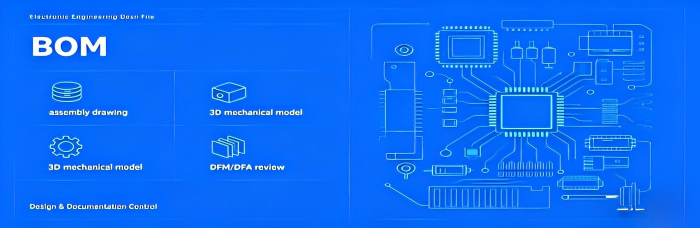
The best way to reduce these risks is to be careful with all design files (BOMs, assembly drawings, and wiring diagrams) and ensure they are correct, complete, and consistent. Design for Manufacturability (DFM) and Design for Assembly (DFA) reviews are supposed to be done at an early stage so that the product is able to be assembled effectively. These reviews facilitate the validation of enclosure fit, tolerance stack-ups, thermal management and serviceability.
Engineering validation testing (EVT), design validation testing (DVT) are prototyping phases that are important to verify system compatibility. Moreover, there should be stringent revision control and change management procedures to avoid differences between design data and manufacturing directions.
BOM Accuracy & Component Strategy
Procurement and assembly is based on the Bill of Materials (BOM). Mistakes in the BOM may lead to failure or delay of products or even incorrect components.
A trusted BOM must contain validated part numbers and manufacturer information, as well as approved vendor lists (AVLs). Parts should be considered in terms of lifecycle status to prevent risk of end-of-life (EOL) and alternative parts to be found. To avoid inconsistencies, it is necessary to keep the BOM and the design files in line.
Incorporating real-time visibility into component availability and lead times can further reduce supply chain risks. This enables manufacturers to foresee shortages and proactively change sourcing strategies.
Supply Chain & Outsourcing Management
The primary risk factors in box-build assembly (particularly with outsourcing) are supply chain instability and supplier variability. The choice of the appropriate partners and their effective management is important.
The manufacturers ought to consider the suppliers in terms of technical capability, quality certifications, production capacity and efficiency in communication. It is important to clearly define the scope of work be it turnkey, consigned or hybrid to be sure that there is alignment.
In order to create resilience, several suppliers are to be qualified in the areas of critical components and safety stock is to be kept in the case of long lead-time products. Incoming inspection procedures can be used to check the quality and authenticity of the components, minimizing the chances of counterfeit components.
Disruptions can further be reduced by regular communication, monitoring performance by using KPIs, and understanding geopolitical or logistical conditions.
Manufacturing Process & System Integration
The manufacturing phase brings about process variability, manual errors, and complexity of systems, as sources of risks. Consistency is important since box-build assembly requires manual work in most cases.
Each step should be outlined with detailed work instructions that have visual guidance. The operators should be trained and certified to maintain the standards. Poka-yoke and other error-proofing methods, like standardized processes, are used to minimize assembly errors.
The calibration of tools, especially torque controlled fastening, is important in sustaining mechanical integrity. Electrostatic discharge (ESD) protection and other environmental controls should also be implemented. Efficiency and organization at the workplace can be enhanced by lean practices such as 5S.
Wiring, Cabling & Integration Control
Wiring and cable assembly consists of critical but error-prone processes (box bulid assembly). Errors in routing, labeling, or connection can cause nonfunctional failures which are hard to diagnose.
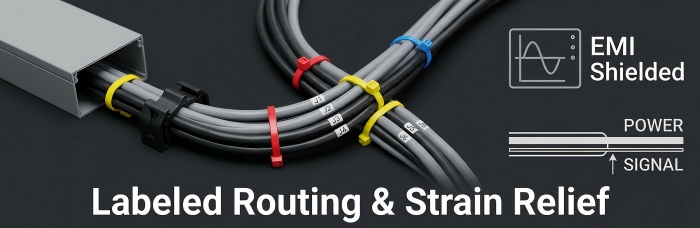
The manufacturers are advised to employ labeled and color coded wiring to reduce these risks. Cable routing paths and lengths should be validated during design to avoid conflicts during assembly. Mechanical stress can be avoided due to proper strain relief and cable management and enhance long-term reliability.
Isolating power and signal lines is useful in reducing electromagnetic interference (EMI). System integrity is done in electrical testing such as continuity tests, insulation resistance tests and others. Ready-made cable harnesses could also enhance uniformity and minimize variability.
Quality Assurance & Inspection
Quality assurance must be integrated throughout the entire process rather than relying solely on final inspection. Absence of a strong quality strategy can result in defects being detected at the late stages.
A comprehensive strategy involves inspection of incoming materials, in-process inspection and end level system testing. Accuracy is enhanced by automated inspection tools, e.g. AOI and functional testing validates that the product is functioning as it was meant to.
Gathering and processing defect information helps manufacturers to detect trends and put corrective and preventive measures (CAPA) in place. Such a method of continuous improvement minimizes the number of reoccurring problems and improves the overall product quality.
Compliance & Regulatory Requirements
Compliance with regulations is a very important element of risk mitigation. The inability to comply with the necessary requirements may lead to delays in certification or limitations on the market.
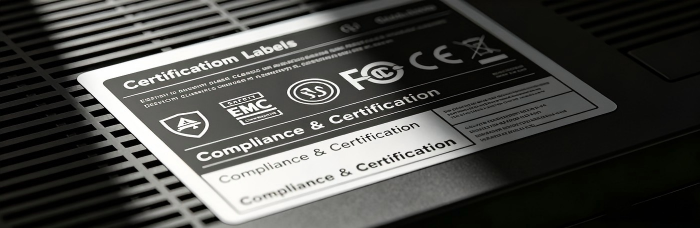
Manufacturers should find out relevant safety, electromagnetic compatibility (EMC) and environmental regulations at an early design stage. Traceability requires appropriate labeling, documentation and certification records.
Collaboration with certified testing laboratories may aid in making sure that it is compliant and facilitating certification. Keeping up with changing regulations is another way of minimizing compliance risks.
Logistics, Packaging & Delivery
The risks do not cease even after production is done, as there are risks in the transportation and storage. Products may be damaged during improper packaging and it may be expensive.
The packaging solutions must have features that prevent shock, vibrations, and exposure to the environment. Durability is achieved by validation using drop and vibration test. The labeling and controlled storage conditions also ensure that the products are not tampered with.
Dependable delivery partners and tracking systems enhance visibility of the delivery and minimize the chance of delays.
Post-Production Support & Continuous Improvement
Risk mitigation is post-delivery of product. To ensure reliability and customer satisfaction, it is crucial to monitor the performance of the field and respond to the issues in time.
Gathering failure information and performing root cause analysis offers a good bit of information on how to improve. A feedback loop between the customer team, the engineering team and the manufacturing team will allow quicker solution to problems.
Having documentation, keeping spare parts, and offering of technical support are all part of the improved customer experience. Burn in testing can also be employed to detect early failures in high-reliability applications.
Risk management during box-build assembly involves the entire life cycle of design validation, accurate BOM, supply chain management, process control, and quality control. Risk management in each phase will contribute to decreasing errors, preventing delays, and stabilizing the functionality of the products. It will also make a difference when integrating different components into a system. PCBCart offers a comprehensive box build assembly service that features competent engineering, stringent quality control, and effective sourcing. These capabilities make it possible for us to mitigate risks during manufacturing and increase the chances of timely delivery.


