



On February 2, 2026, the U.S. Food and Drug Administration’s Quality Management System Regulation (QMSR) officially went into full effect, replacing the decades‑old 21 CFR Part 820 (legacy QSR) and incorporating ISO 13485:2016 by reference as the core quality framework for all medical devices sold in the United States. This is the most significant U.S. medtech regulatory change in nearly 30 years, directly aligning FDA quality requirements with the global ISO 13485 standard and reshaping design, risk, documentation, and compliance practices for thousands of manufacturers worldwide.
For designers and R&D teams, the update is not merely a “paperwork change.” It embeds risk‑based thinking into every stage of the product lifecycle, tightens design control and traceability rules, and raises the bar for audit‑ready documentation—all while maintaining critical U.S.‑specific requirements for UDI, labeling, postmarket surveillance, and recalls. With over 20,000 ISO 13485 certificates issued globally (ISO 2019 data) and an estimated 6,500–7,000 U.S. establishments now operating under QMSR, compliance is no longer optional—it is the foundation of market access across the U.S., EU, UK, Canada, and other major markets.

This article breaks down the ISO 13485:2026-aligned QMSR changes most impactful to device designers, backed by early FDA inspection data and industry benchmarks, and provides actionable guidance for building compliant, robust, and market‑ready designs in 2026 and beyond.
Why This Matters: The End of Dual Compliance
Before QMSR, U.S. manufacturers followed FDA’s QSR, while the rest of the world relied on ISO 13485. This dual system forced companies to maintain two parallel quality frameworks, duplicate documentation, and pass separate audits—driving up costs, delaying product launches, and increasing compliance risk.
Industry surveys from 2025 show that 78% of U.S. medtech firms operated separate QSR and ISO 13485 systems, with an average annual compliance cost of $120,000–$180,000 per facility to maintain both. For design teams, this meant reconciling conflicting requirements for design reviews, risk files, and traceability—creating inefficiency and human error.
QMSR eliminates this friction by harmonizing U.S. rules with ISO 13485:2016, while preserving FDA‑specific provisions. Early analysis estimates that fully harmonized companies can reduce compliance costs by 30–40% and cut audit preparation time by half. For designers, this translates to one unified set of design controls, risk processes, and documentation standards for global markets.
Key ISO 13485:2026 Changes Impacting Designers (With U.S./EU Data)
1. Lifecycle‑Wide Risk Management Is Now Non‑Negotiable

Under legacy QSR, risk management was often treated as a “design‑phase only” activity. Under ISO 13485:2016 and QMSR, risk management (per ISO 14971) must be continuous from concept through design, production, distribution, use, postmarket surveillance, and end‑of‑life.
Early FDA inspection data (Feb 2–Apr 20, 2026):
51.2% of QMSR inspections cited inadequate risk integration as a top finding (vs. 32% pre‑QMSR)
83% of design‑related 483 observations linked risk assessments to incomplete design inputs or missing validation links
For designers, this means:
Risk planning starts at concept, not after design freeze
Risk files update with every design change (software, materials, components)
Design inputs, verification, and validation directly map to risk control measures
Risk documentation is audit‑ready at all stages, not just pre‑submission
2. Strengthened Design Controls & Formal Design Transfer
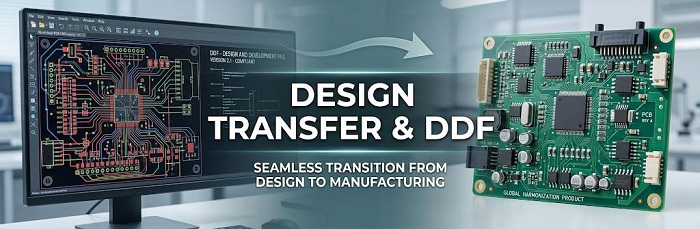
ISO 13485:2016 replaces legacy QSR’s design control language with prescriptive, auditable requirements for design planning, inputs, outputs, reviews, verification, validation, and design transfer (Clause 7.3.7).
U.S. vs. EU compliance gaps (2025–2026 industry surveys):
62% of U.S. firms lacked formal design transfer procedures pre‑QMSR (vs. 28% of EU MDR‑compliant firms)
71% of FDA 483s in early 2026 cited missing or incomplete Design History Files (DHF)/Design and Development Files (DDF)
Critical requirements for designers:
Clear, testable design inputs (user needs, regulatory specs, materials, performance)
Structured design reviews at defined gates (with documented decisions/actions)
Traceable verification/validation linked directly to inputs and risk mitigations
Formal design transfer to ensure manufacturing can replicate the design at scale
Controlled design changes with impact assessment, re‑verification, and risk updates
3. Unified Terminology + Retained FDA‑Specific Rules
QMSR aligns terminology with ISO 13485 while keeping FDA‑unique requirements for UDI, labeling, traceability, and postmarket reporting.
Key terminology shifts:
DHF → DDF (Design and Development File)
DMR → MDF (Medical Device File)
Design review → Design and development review
Retained FDA must‑haves for designers:
UDI integration in early industrial design and labeling
Durable, legible labeling/packaging validation
Full lot‑to‑device traceability (including service/repair records)
Postmarket feedback loops for design improvements
4. New Inspection Model: ISO‑Style, Clause‑Level Audits
FDA has retired the legacy QSIT program and adopted a QMSR/ISO 13485‑aligned inspection framework (7382.850). Inspectors now issue clause‑level findings mapped directly to ISO 13485 sections, mirroring EU notified body audits.
Early inspection trends (Feb–Apr 2026):
48.8% NAI (No Action Indicated) (down from 52.7% pre‑QMSR)
51.2% VAI (Voluntary Action Indicated) (up from 43.5%)
0% OAI (Official Action Indicated) in early QMSR period
Average: 2.8 clause‑level findings per inspection, most often in risk management (Clause 8.5) and design controls (Clause 7.3)
For designers, this means every design document, risk record, and review note must be traceable to a specific ISO 13485 clause.
5. Supplier & Competency Oversight Extends to Design
ISO 13485:2016 elevates supplier qualification and personnel competency to core quality obligations—including design teams and external partners.
Industry stats:
68% of warning letters cite ineffective CAPA linked to supplier‑related design failures
45% of EU MDR non‑conformities stem from unqualified design contractors
Designer implications:
Qualify critical suppliers (components, materials, contract design) before design lock
Document design team competency (training, experience, role‑specific skills)
Extend design controls to outsourced activities (you retain regulatory responsibility)
Practical Steps for Design Teams in 2026 (U.S./EU Best Practices)
Based on FDA early findings and EU MDR experience, design teams should prioritize these actions:
Gap Assessment (30 Days): Map current design controls, risk processes, and DDF/DHF structure to ISO 13485:2016 clauses 7.3 (design) and 8.5 (risk). 76% of top EU firms completed this by late 2025.
Update SOPs & Templates: Revise design review checklists, risk matrices, and traceability tools to align with ISO 13485 terminology and clause‑level traceability.
Lifecycle Risk Integration: Embed risk reviews at every design gate (concept, detailed design, verification, transfer). Link every risk control to a specific design input or test case.
Strengthen DDF Structure: Organize files to support ISO‑style clause‑level audits. Include design plans, inputs, outputs, reviews, V&V, risk files, and change records in a single, searchable repository.
Align with FDA‑Specifics: Ensure UDI, labeling, and traceability requirements are built into design from day one—not added post‑prototype.
Train Teams: Deliver ISO 13485:2016 design/risk training to all designers and engineers. Companies with trained teams see 40% fewer inspection findings (FDA internal data, 2026).
Why This Is a Competitive Advantage for Global Markets
ISO 13485:2026 alignment is not just compliance—it is a global market accelerator:
Faster U.S. & EU approvals: Harmonized documentation reduces review time by 25–35% (IMDRF 2025)
Lower compliance risk: Single system eliminates dual‑audit gaps
Stronger product safety: Risk‑informed design reduces postmarket issues by up to 50%
Better supply chain resilience: Qualified suppliers and clear design transfer reduce production delays
For designers, this rewards proactive, user‑centric, risk‑driven design—the foundation of successful medtech innovation in 2026 and beyond.
Partnering for Compliant, High‑Quality Medical Device Design
As you adapt your design workflows to meet ISO 13485:2026 and QMSR requirements, partnering with a quality‑focused, process‑rigid EMS provider becomes critical to turning robust designs into consistent, traceable hardware.
PCBCart is a global PCB manufacturing and assembly partner with deep expertise in high‑reliability electronics for regulated sectors. Our quality system is certified to ISO 9001 and IATF 16949, with UL recognition and RoHS compliance across all production facilities. We bring automotive‑grade process discipline—including FMEA, SPC, and full lot traceability—to every build, supporting the rigorous documentation and risk‑mitigation expectations of modern medical device quality systems.
Our engineering team works closely with designers on DFM/DFA optimization, design transfer, and BOM validation, ensuring your risk‑informed design translates smoothly into scalable, repeatable production. From prototype to high‑volume assembly, PCBCart maintains IPC‑A‑610 Class 2/3 workmanship standards and 100% AOI, X‑ray, and functional test coverage—so you can meet FDA and EU traceability and reliability expectations without compromise.
Whether you are developing Class I, II, or III devices, aligning your design and manufacturing processes with ISO 13485:2026 is essential for global success. With PCBCart as your manufacturing partner, you can innovate boldly while maintaining the process discipline and traceability the new regulatory landscape demands.
Helpful Resources
• A Guide to Medical PCB Fabrication and Assembly
• Essential Standards for Medical PCB Assembly
• Applications and Types of PCBs for Medical Industry
• Design for Manufacture and Assembly of PCBs and General Rules it Conforms to
• Advanced PCB Assembly


