



One of the most widely used surface finishes on the PCB in today's electronics manufacturing is Electroless Nickel Immersion Gold (ENIG). Due to its excellent flatness, high oxidation resistance and ability to be used in fine pitch components, ENIG is commonly used in products including HDI boards, BGA assemblies, automotive electronics, medical devices, and telecommunications equipment.
Printed circuit boards are subjected to multiple reflow cycles more and more when electronic assemblies become more complex and compact. Several reflows at high temperatures occur to a PCB during double-sided SMT assembly, component replacement, repair operations and repeated thermal profiling. Although ENIG shows good performance in many challenging applications, long-term exposure to repeated thermal cycles can impact the solderability, mechanical properties, and reliability of ENIG.
What Happens During Multiple Reflow Cycles?
Reflow Cycle: The process of heating a solder paste to melt and create an electrical connection between the components and PCB pads. The typical peak reflow temperatures in lead-free manufacturing are between 240°C and 260°C which places a heavy thermal stress on the surface finishes of the PCB.
An ENIG finish is comprised of two metallic layers:
Electroless Nickel: Provides a diffusion barrier between the copper and solder.
Immersion Gold: Presents the nickel from oxidizing prior to soldering.
When soldering, the thin layer of gold melts into the solder and the solder comes into contact with the layer of nickel below the gold. This interface is continuously changed with repeated reflow which may affect the long-term reliability.
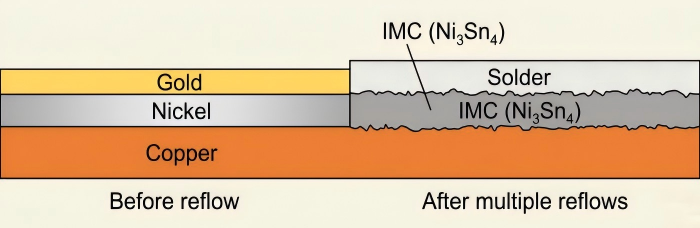
Intermetallic Compound Growth
An important effect of a multiple reflow cycle on ENIG is the progressive formation of intermetallic compounds.
When the molten solder comes into contact with the nickel layer, compounds of nickel and tin (Ni₃Sn₄) are created at the interface of the solder joint. The growth of IMC is essential for association of solder bonding; however, if too much IMC forms, the joint reliability will be compromised.
Studies with repeated reflow exposure indicate that with each reflow, the thickness of IMC layers increases and the resistivity of solder joints increases. Consequently, solder joints when exposed to thermal stress can be brittle and not as able to resist mechanical fatigue.
Too much intermetallic growth can result in:
Brittleness of solder joints
Reduced mechanical strength
Higher risk of cracks developing in the piping system
Decreases heat shock tolerance and stability
Generally, solder joints on ENIG exhibit slower IMC growth rates than other copper-based finishes, but continued reflow cycles may still cause weakening solder joints over time particularly in severe operating environments.
Phosphorus Enrichment and Interface Degradation
Phosphorus is present in the medium to high phosphorus range in the electroless nickel layer in ENIG. Repeated heating causes phosphorus to build up at the interface, and nickel to diffuse into the solder.
Such a phosphorus rich area can become brittle on multiple thermal exposures, leading to the possibility of failure at the interface. Cracks can form at the less good joined interface as additional stresses are applied during use.
Enrichment of phosphorus can lead to:
Weak solder bonding
Reduced wettability
Brittle fracture zones
Solder joints that fail to bond properly.- Failure of solder joints
Therefore it is important to have a stable ENIG chemistry and good plating control to ensure good assembly performance.
Black Pad and Solderability Concerns
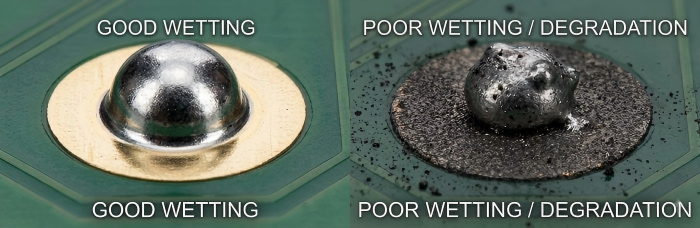
A common reliability problem of ENIG is the “black pad” phenomenon. When too much corrosion takes place on the nickel layer during the immersion gold process, a dark, phosphorus containing surface is created, which interferes with the solder bonding process, leading to "black pad".
While black pad defects may not always be apparent during inspection, reflow can also exacerbate the issue, by adding thermal stress to already weak interfaces, due to the number of reflow cycles. Sometimes, solder joints may look good at first, but will fail due to vibration, thermal cycling or mechanical shock.
In addition to black pad, several reflow cycles can also cause solderability to decrease due to:
Nickel oxidation
Surface contamination
Excessive IMC formation
Reduced wetting performance
The issues of reliability are becoming more significant due to the increasing portability, miniaturisation, and complexity of electronic products.
Challenges in Lead-Free Assembly
The multiple reflow cycles have been accelerated when using lead-free solder. Lead-free soldering processes need higher temperatures and longer time above the liquidus than do traditional tin-lead soldering.
These more extreme thermal conditions speed up:
Nickel dissolution
Intermetallic growth
Oxidation
Thermal fatigue
Hence, ENIG surfaces are more likely to degrade in lead-free conditions after thermal cycling. This is particularly important for applications with long service life, like in automotive, aerospace or industrial electronics.
How to Reduce Reflow-Related Failures
Multiple reflow conditions often require manufacturers to take several precautions to ensure the reliability of ENIG finishes.
Tight Process Control
Nickel thickness, gold thickness, phosphorus content and plating chemistry are carefully monitored to minimize the chance of black pad and solderability issues.
Optimized Reflow Profiles
It is important to avoid any unnecessary thermal exposure. One of the best ways that manufacturers can minimize peak temperatures, time above liquidus, and unnecessary rework cycles is to limit such extremes as much as possible.
Proper Storage and Moisture Management
Soldering performance can be adversely impacted by humidity and contamination. ReliaBility during repeated reflow process is enhanced by proper storage, dry cabinet storage, and handling moisture sensitive parts.
Alternative Surface Finishes
If high-temperature performance is a critical requirement for applications, some manufacturers may consider using either ENEPIG or immersion silver, depending on the assembly requirements.
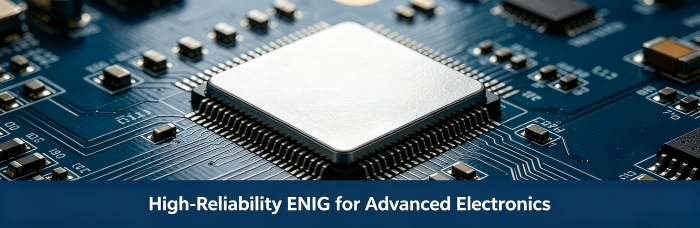
ENIG is still one of the most reliable and versatile PCB surface finishes of the present day electronics manufacturing. The high flatness, good corrosion resistance and fine pitch compatibility facilitate high density PCB and advanced SMT assembly.
But several reflow cycles can bring a lot of reliability problems. Multiple heat exposures encourage the growth of intermetallic compounds, the enrichment of phosphorus, the brittleness of the solder joints and in some cases, can exacerbate latent black pad problems. The effects are further enhanced when the environment is lead-free, because higher temperatures are used during processing.
To guarantee long-term solder joint reliability, manufacturers need to optimize the quality of the ENIG plating, reflow profiles, and thermal management during the entire soldering assembly process.
With the evolution of electronic products to higher density and complexity, it is increasingly important to work with an experienced PCB manufacturing partner. PCBCart offers professional PCB assembly and fabrication service with strict quality control system that meets the high reliability applications of electronic manufacturing.
Helpful Resources
• PCB Surface Finishes Introduction and Comparison
• The Most Comprehensive Guidelines for Surface Finish Selection
• Comparison between Lead Soldering and Lead-Free Soldering Manufacturing Procedure in PCBA
• Elements Influencing SMT Soldering Quality and Improvement Measures


