



High- Mix, Low-Volume (HMLV) manufacturing is flexible - many product variants, shorter production cycles, and quicker iteration cycles. There is risk in that flexibility, too. Little design oversights may result in disproportionate delays without vigorous Design for Manufacturability (DFM) practices.
There are numerous project slowdowns in PCB manufacturing particularly which are not the result of significant design failures. They are rather a result of slight discrepancies between design intention and manufacturing reality. These problems are usually not noticed during the design but during fabrication or assemblies- when they are much more expensive and time consuming to repair.
The Invisible Cost of Incomplete Design Specification
Incomplete or ambiguous design documentation is one of the earliest, and most avoidable sources of delay. Speed is of the essence in HMLV environments, so manufacturers are keen on the quality and completeness of the information they are presented with.
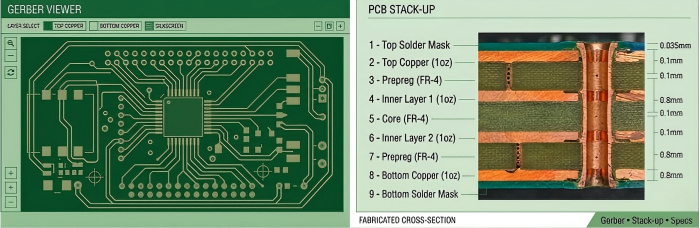
The absence of stack-up information, vague requirements of the drill, or the discrepancy of Gerber files with the fabrication notes may quickly halt production. Even minor uncertainties make manufacturers ask questions and develop a two-way communication that will push the whole process back.
Other than documentation, stack-up design itself is frequently underestimated. Warpage, signal integrity problems or fabrication adjustments can be caused by unbalanced copper distribution, undefined dielectric properties, or unrealistic impedance targets. These issues might not be experienced in simulation but are essential in actual production.
The takeaway is plain and simple a clearly defined design package is not merely a ritual-it is the keystone to effective production.
When Layout Decisions Stretch Manufacturing Limits
PCB layout is another area where DFM issues frequently arise. Designers can optimize based on density or performance, but in the process may overstretch designs to process limits.
A typical example is trace widths and spacing. As modern fabrication is capable of supporting very fine geometries, a design at the absolute minimum can have very little variation. This is more likely to cause etching defects, shorts or non-uniform yields, in HMLV production where setups can be changed in quick succession.
Likewise, hidden risks may be caused by pad and via design. Insufficient annular rings, mismatched drill sizes, or improperly defined via structures can be acceptable to a design rule check, but fail in fabrication or assembly. These problems may lead to poor quality of solder joints or unreliable electrical connections.
Routing consistency is another minor but significant aspect. Speed signals, differential pairs and traces with impedance control demand consistency. Unstable routing routing may cause performance issues and difficulties in manufacturing, which results in further validation.
Simply put, planning to the limit can seem effective on paper, but this approach can be incredibly unsteady in real-world manufacturing.
Problems in Assembly That Start at the Design Phase
A lot of the HMLV delays due to assembly are in reality due to previous design choices. DFM is closely related to Design for Assembly (DFA), and neglecting it may result in bottlenecks in the process of production.
One of the factors is the component placement. Pick-and-place processes can be slowed down by dense layouts, uneven orientations, or poor spacing, leading to a higher risk of placement errors. These problems are even more critical in HMLV environments, where speed of changeover is important.
Solder mask design and silkscreen design are also a bigger part than many teams anticipate. Improper mask clearance may result in solder bridging, and can make inspection and troubleshooting more difficult with overlapping or indistinct silkscreen markings. These are not merely cosmetic problems; they have a direct impact on yield and rework rates.
Moreover, missing assembly constituents, e.g. fiducials or tooling holes, may affect alignment and lead to decreased efficiency in the process. Such minor omissions tend to be overlooked until the point of production when they are hard to rectify without redesign.
Material and Mechanical Decisions Cause Late Delays
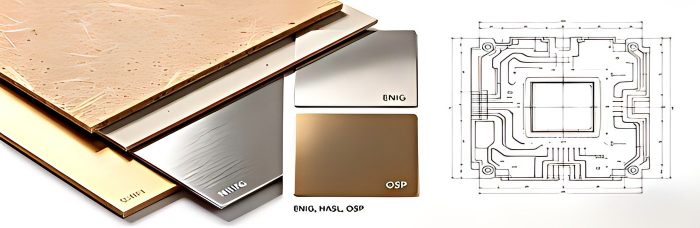
DFM issues that silently affect timelines include material selection. The selection of uncommon materials or the request to use inappropriate surface finishes may create some sourcing problems or incompatibility risks. These delays can be especially disruptive in HMLV projects, where the lead times are already short.
Manufacturing processes need to correspond to the material even in the event when there are materials available. To illustrate, some finishes might not be compatible with certain assembly processes, causing solderability problems or reliability problems.
Mechanical design is significant as well. Board outlines, cutouts, tolerances and drilling requirements should be well defined and realistic. Lacking or unclear mechanical specifications may compel the manufacturers to make inferences about the design purpose, which may escalate the chances of mistakes and delays.
Such problems tend to arise near the end of the process- in fabrication set up or early production- when they are more challenging and expensive to make.
Why DFM Issues Persist in HMLV Projects
Why do these problems still take place? The answer is in the way DFM is normally handled.
DFM is not considered as part of the design process in most workflows but a subsequent validation step. Key design decisions are made by the time manufacturability checks are done. Correcting a problem at this phase may involve either redesign or extra prototyping or delay in production.
This issue is exacerbated by HMLV manufacturing due to its rushy nature. Teams are driven by a need to be fast and flexible, often neglecting proper validation. In the absence of formal DFM integration, minor details are ignored, and later they will come to haunt production.
A More Workable Approach to DFM in HMLV
To avoid DFM related delays, no need to slow down innovation, but to coordinate design and manufacturing earlier and more regularly.
A better place to start is to incorporate DFM thinking in all levels of design. Rather than depending on end-of-process checks teams ought to check decisions as they occur--particularly stack-ups, materials and layout constraints.
Collaboration is also vital. One can also engage in fabrication and assembly partners early, which will reveal potential problems before they turn out to be expensive. Manufacturers present experience into process capabilities, material availability, and frequent points of failure experience, which is hard to capture in just design tools.
Design with margin, not purely capability is also significant. Working within established process boundaries instead of stretching them increases predictability and minimizes risk, especially in HMLV environments where repeatability may not be consistently the same.
Lastly, problems can be identified early by conducting iterative validation, either by reviewing designs, simulating, or running small pilot programs. These measures might appear as an extra burden, however, they will considerably decrease the chances of later delay of the process.
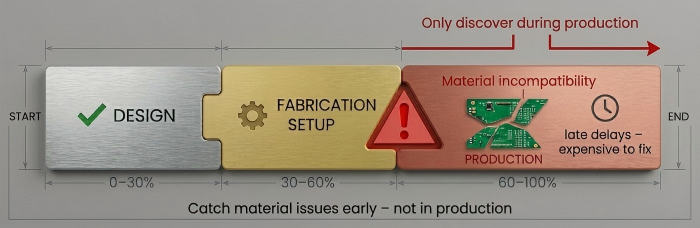
HMLV manufacturing is not inherently subject to delay; in most cases, all delays result from the same mistakes that could have been avoided through DFM. Such problems may include insufficient documentation, poorly designed layouts, inadequate assembly specifications, and last-minute material revisions, all of which can be avoided.
In order to speed up production, DFM should become a consistent and continuous part of the production process, rather than an afterthought. PCBCart provides comprehensive DFM services and is well-versed in the intricacies of producing HMLVs. If you want to reduce risk, accelerate timelines, and ensure your designs are production-ready from the start, it’s worth reaching out to PCBCart for a quote and expert guidance on your next project.


