



Most EMS supplier evaluations start and end with a certificate check. A procurement team collects ISO or IATF paperwork, tours a clean factory floor, reviews a capabilities slide, and signs. The problem is that on paper, most contract manufacturers look nearly identical — the same quality management system language, the same equipment list, the same photos of pick-and-place lines under bright lighting.
The differences that actually determine whether a program succeeds or fails rarely show up in a standard supplier questionnaire. They live in ten specific, easy-to-overlook technical questions — the same ones we expect our own customers to ask us before signing. Buyers who ask them consistently avoid the two most expensive EMS mistakes: discovering a process capability gap after tooling is committed, and discovering a quality system gap after a field failure lands on their desk.
Questions 1–3: Process Capability Verification
Capability claims are cheap. Capability verification is not. These three questions separate suppliers who can support tight-tolerance, mixed-technology builds from suppliers who are describing aspirational capability.
What is the smallest pad pitch you can reliably produce in volume, and what equipment verifies it? A good answer names a specific pitch, a specific inspection method (3D SPI, AOI resolution), and the process window it's held to — not just "we can do fine-pitch." At PCBCart, this is a question we answer with numbers, not adjectives.
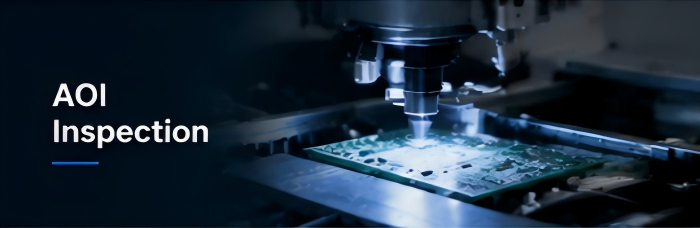
For selective soldering, what nozzle types do you stock, and do you offer nitrogen-shielded soldering? This matters for any board with mixed SMT/THT components, connectors near heat-sensitive parts, or applications where dross and oxidation defects are unacceptable. A supplier without nitrogen capability is telling you something about what programs they're built for — we run it as standard equipment for exactly this reason.
What is your X-Ray inspection resolution, and can you perform oblique-angle inspection for BGA and QFN packages? Standard top-down X-Ray catches gross voiding. Oblique-angle inspection catches the head-in-pillow and bridging defects that top-down imaging misses — the ones that show up as field failures, not incoming inspection rejects. We built it into our standard process for exactly this reason.
These three questions alone will disqualify a meaningful share of suppliers who market themselves as precision-capable but don't hold the underlying process control.
Questions 4–6: Quality System Verification
IATF 16949 certification is a useful proof point, but certification tells you a system exists — not how it performs on your board. These questions test the system directly.
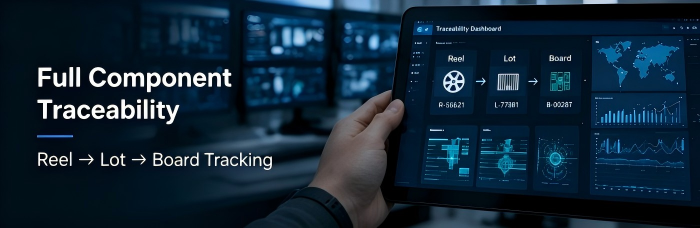
Is your MES traceability at the board level or the component level, and can you export a customer-readable traceability report? Board-level traceability tells you which panel a unit came from. Component-level traceability tells you which reel, which lot, and which operator touched a specific component on a specific unit — the difference matters in a recall scenario or an IP-sensitive build. We track at the component level and export reports customers can read without an engineering background.
What is your first-article inspection process, and who signs off before production releases? Ask for the actual approval chain. A first article that only an operator reviews is a different risk profile than one requiring engineering sign-off against a documented inspection plan. Our process requires engineering sign-off before any production release, not just an operator check.
Can you provide DPPM (defective parts per million) data for the last 12 months across your customer base? Suppliers confident in their quality performance will share this. Suppliers who hesitate or offer only qualitative reassurance are telling you something too. We share our DPPM data with customers who ask, because we'd rather have that conversation before a contract is signed than after.
Questions 7–9: Program Management Capability
Process capability and quality systems matter little if the program itself is poorly managed. These questions surface how a supplier actually operates day to day.
What is your SLA for ECO (engineering change order) response time? In HMLV production, change orders are constant — component substitutions, design revisions, documentation updates. A supplier without a defined SLA will bottleneck your program the first time something changes. We hold ourselves to a defined SLA rather than a "best effort" commitment, because customers plan around it.
Are your NPI engineers separate from your production engineers? This is a structural question, not a personnel question. Suppliers who run NPI and mass production through the same engineering team often optimize for one at the expense of the other. We keep our teams separate so NPI work never competes with production priorities for the same engineers.
Can customers schedule a factory audit without extended advance notice? A supplier confident in its operations will accommodate reasonable audit requests. Long notice requirements, or resistance to unannounced spot checks, often indicate a facility that needs time to prepare rather than one that performs consistently. We welcome customer audits on reasonable notice, precisely because our floor doesn't need advance preparation to pass one.
Question 10: Risk Transfer
If a field failure is traced to an EMS process issue, what is the liability determination process, and what does the remediation commitment look like?
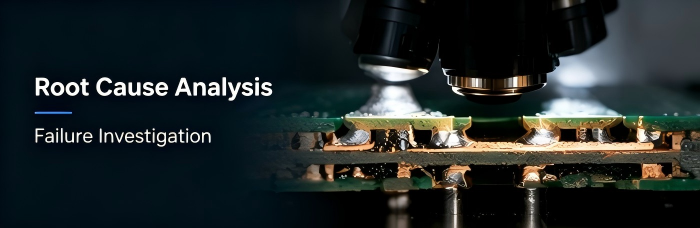
This is the question that separates marketing confidence from operational confidence. Ask for the specifics: how root cause is jointly determined, what documentation is used, and what the supplier commits to — replacement, cost-sharing, or something else. We have this conversation directly with customers before a program starts, not through generic contract language, because our traceability and inspection data are detailed enough to support a clear root-cause finding when it matters.
Turning This Into a Repeatable Evaluation
Across all four categories, the pattern in a supplier's answers matters more than any single response. Process capability answers should sound like specific tolerances and named inspection equipment, not "we can handle anything you need." Quality system answers should include component-level traceability and documented sign-offs, not a certification number offered as if it closes the conversation. Program management answers should reference defined SLAs and separated NPI and production teams, not "we'll figure it out as we go." And risk transfer answers should lay out a clear liability and remediation process rather than vague reassurance.
Running these ten questions consistently across every supplier under evaluation turns a subjective factory tour into a comparable, defensible decision — which matters as much for a startup qualifying its first contract manufacturer as it does for a supply chain VP consolidating vendors.
These ten questions, with the reasoning behind each one, are the same standard we apply to our own processes — and they're a useful checklist to bring into your next supplier review, whether you're qualifying a first contract manufacturer or re-evaluating an existing one. If you'd rather see how we specifically respond to your design, we offer a free DFM review as a practical first step — a faster way to see how we actually handle your board, not just how we answer a questionnaire.
Helpful Resources
• How to Evaluate A PCB Manufacturer or A PCB Assembler
• Some Handy Methods in Evaluating SMT Assemblers Capabilities
• Comparison of AOI, ICT and AXI and When to Use Them during PCB SMT Assembly
• PCB Quality Inspection
• First Article Inspection Service
• Advanced PCB Assembly Capability


