



Industry
Life Sciences
Customer Profile
A North American developer of compact laboratory diagnostic instruments designed for biochemical testing in research and clinical laboratories. The company was preparing to transition a new benchtop diagnostic system from engineering validation to early pilot production.
The Challenge
As the product approached commercialization, the customer faced two key manufacturing challenges.
Managing Design Iterations During Pilot Production
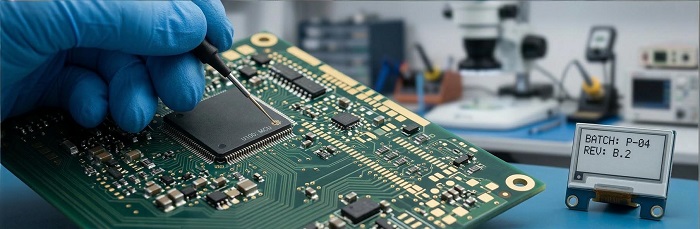
The instrument’s control electronics relied on a 10-layer mixed-signal PCB integrating sensor interfaces, microcontroller processing, and high-speed communication modules. During pilot builds, the engineering team continued to release design updates based on internal performance testing.
To maintain development momentum, the customer needed a manufacturing partner capable of incorporating engineering changes between builds while maintaining consistent assembly quality.
Supporting Small-Batch Production
Because the product was still in its early market introduction phase, demand volumes were uncertain. Production batches were expected to remain relatively small, typically 80–200 units per build, requiring a flexible manufacturing approach suitable for high-mix, low-volume production.
The customer needed a supplier that could support rapid iteration and reliable small-batch assembly without introducing unnecessary delays in the development timeline.
The Solution
PCBCart worked closely with the customer’s engineering team to support an efficient pilot production process.
Design for Manufacturability Review
Prior to the first pilot run, PCBCart conducted a manufacturability review of the PCB layout and bill of materials. Minor adjustments were recommended to improve assembly stability, including optimized pad geometries for fine-pitch components and improved spacing in several dense component areas.
These refinements helped reduce assembly variability and improved consistency across pilot builds.
Flexible High-Mix Production Support
To accommodate ongoing design revisions, PCBCart implemented a flexible production workflow that allowed engineering updates to be incorporated between scheduled builds. Clear revision control and build documentation ensured that each production batch matched the correct design version.
Typical pilot production cycles were completed within 4–5 weeks, allowing the customer to validate design improvements while maintaining a steady supply of assembled boards for system integration and testing.
The Results
With a stable pilot production process in place, the customer was able to continue refining the diagnostic platform while preparing for broader market introduction.
Key outcomes included:
Approximately 30% faster pilot build turnaround compared with the customer’s previous multi-vendor process
Consistent assembly yield above 97% across multiple design revisions
Delivery of approximately 600 PCB assemblies across several pilot production runs
This collaboration allowed the customer to maintain development momentum while supporting initial customer deployments of the diagnostic system.
Ongoing Collaboration
PCBCart continues to support the program with PCB fabrication and PCBA manufacturing for subsequent production batches, helping the customer maintain a flexible supply chain as the product moves toward larger-scale commercialization.


