



Base PCBA quotes almost universally include Automated Optical Inspection (AOI), which catches the majority of visible defects — but X-ray inspection and In-Circuit/Functional Test are typically not included by default and are billed as separate line items. The reason a single "inspection" line on a quote isn't enough information is that these methods don't overlap as much as their shared label suggests — each one is genuinely blind to certain defect types the others catch easily.
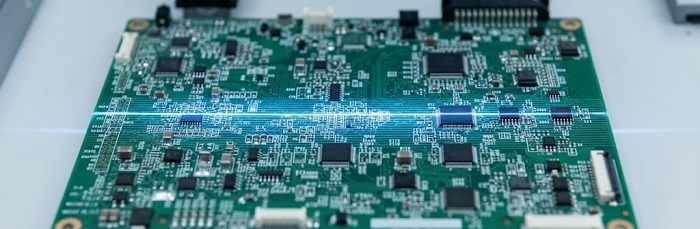
The Same Board, Four Different Verdicts
The clearest way to see why one inspection method isn't a substitute for another is to look at how each would handle four different defects on the same hypothetical board. This matters more than it might seem, because a quote that simply says "inspection included" gives you no information about which of these four scenarios your board is actually protected against.
A missing resistor — AOI catches this immediately; it's a visible placement defect and exactly what optical inspection is built for. X-ray, ICT, and functional test would likely catch it too, but AOI is the cheapest, fastest way to find it.
A voided solder joint under a BGA package — AOI sees nothing, because the joint is physically hidden beneath the component body. X-ray inspection is the only practical way to catch this at incoming or in-process inspection, since it can see through the package to the joint underneath.
A wrong resistor value that looks correct — a 10kΩ resistor installed where a 1kΩ was specified looks identical to AOI's camera. Neither AOI nor X-ray can tell the difference by sight. In-Circuit Test, which measures actual component values electrically, is what catches this one.
An intermittent connection that only fails under specific voltage or temperature conditions — this can pass AOI, X-ray, and even ICT, since none of them test the board under real operating conditions. Only functional test, which exercises the board's actual intended behavior, has a chance of catching it — and even then, only if the test conditions happen to trigger the failure.
Four defects, four different methods needed to catch them, and no single method covers all four. That's the entire reason "inspection" as a one-word line item on a quote doesn't tell you much — PCBCart's own comparison of these methods makes the same point: each one is suited to a different stage and a different category of defect, not a hierarchy where the most expensive one simply subsumes the others.
The Assurance Ladder
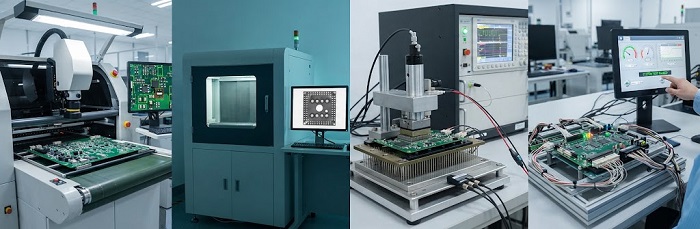
Think of the four methods as rungs on a ladder, where each step up catches defect categories the steps below structurally cannot:
Rung 1 — AOI. Bundled by default on nearly every quote. Catches visible placement and solder defects. Blind to anything hidden or anything electrical.
Rung 2 — X-ray. Usually a separate line item. Catches hidden solder joint issues under BGA, QFN, and other bottom-terminated packages. Blind to wrong component values and functional behavior.
Rung 3 — ICT. Usually a separate line item, requiring a dedicated test fixture. Catches wrong values, opens, and shorts electrically. Blind to whether the board actually performs its intended function under real conditions.
Rung 4 — Functional test. The most custom and most expensive to set up. The only rung that verifies actual behavior — but it's only as good as the specific conditions it tests under, so it isn't an automatic guarantee against every possible field failure either.
Climbing the ladder costs more at each step, which is exactly why matching your rung to your actual risk — rather than either skipping X-ray on a BGA design to save a small fee, or paying for functional test on a design with no real functional-failure risk — is the actual skill here, not simply "buying the most inspection possible."
What's Bundled vs. Billed Separately
| Inspection Type | Included by Default? | Blind Spot |
|---|---|---|
| AOI | Usually yes | Hidden joints, wrong values, functional behavior |
| X-ray | Rarely | Wrong component values, functional behavior |
| ICT | Rarely | Hidden solder voiding, functional behavior under real conditions |
| Functional Test | Rarely | Anything outside the specific tested conditions |
Common Mistakes When Scoping Inspection
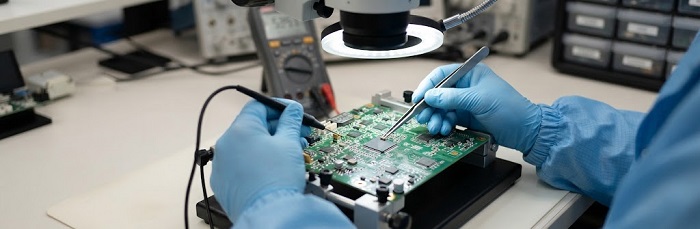
Most inspection-scope mistakes trace back to treating the four methods as a single upgrade path rather than four different tools for four different jobs.
• Assuming "inspection" is a single, uniform service. As the four-defect walkthrough shows, each method has a real blind spot the others cover — assuming any one of them makes the others redundant is a common and costly misunderstanding.
• Skipping X-ray on a BGA design to save a small per-unit fee. The modest cost of X-ray inspection is trivial compared to the cost of field failures traced back to hidden voiding that AOI structurally cannot detect.
• Not asking about sampling rate. A supplier's default inspection sampling rate may be lower than you assume; if 100% inspection matters for your product, it needs to be requested explicitly rather than assumed as the default.
• Treating a passed inspection as a guarantee of long-term reliability. Inspection confirms the board was built correctly at the time of manufacture; it doesn't substitute for your own reliability or environmental testing if your product will face demanding field conditions.
How to Right-Size Your Test Scope

Match your inspection investment to your component risk profile rather than applying a single test scope uniformly across every design: a simple through-hole board with no BGA packages rarely needs X-ray, while any design with BGA, QFN, or other bottom-terminated components should treat X-ray as close to mandatory rather than optional. For safety-critical or field-deployed products, functional test is worth the additional setup cost even on a small production run, since it's the only test method that verifies actual product behavior rather than just placement and connectivity.
A useful way to think about this decision is to ask, for each defect category on the ladder above, what happens downstream if that specific type of defect ships undetected. A missing resistor that AOI would have caught is usually a fast, cheap field return. A voided BGA joint that X-ray would have caught can mean an intermittent failure that's expensive and slow to diagnose once it's already in a customer's hands. A functional defect that only shows up under specific conditions can mean a safety incident if the product is used in a demanding environment. The cost of each rung on the ladder should be weighed against the cost of that specific failure mode reaching the field, not against some abstract idea of "more testing is always better" — over-testing a low-risk design wastes money just as surely as under-testing a high-risk one creates exposure.
FAQs
1. Does passing AOI and X-ray mean the board will work correctly when powered on?
Not necessarily — both are structural inspections that verify the board was built correctly, not that it performs its intended function under real operating conditions.
2. If I only get sampling inspection, how is the sample size decided?
It's usually tied to an acceptance quality limit (AQL) agreed for the run — ask what AQL applies before assuming every unit gets checked.
3. Does functional test replace my own testing after the boards are integrated into my product?
No — functional test verifies the board in isolation, not how it behaves once combined with your enclosure, firmware, and other system components.
4. If a supplier says "100% AOI," does that mean every joint or every board?
Usually every board, not necessarily every joint scrutinized with equal depth — ask specifically what the 100% figure refers to.
5. Can I get inspection reports to pass along to my own customers?
Ask directly — a written report per production run is a reasonable request and gives you your own documentation trail, separate from whatever the supplier retains internally.
Further Reading
• Comparison of AOI, ICT and AXI and When to Use Them
Ready to confirm your own test scope before production? Request a PCB Assembly quote and ask exactly which inspection methods are included by default.


