



Medical technology is making a great leap forward when it comes to the wearable nature of it. Smart health monitors, wearable ECG, glucose monitors, hearing aids, biosensor patches and others are shrinking, getting lighter and more intelligent. These innovations enable real-time tracking for patients, enhance diagnostics and facilitate remote healthcare. There is an enabling technology behind many of these advancements and it's called rigid-flex printed circuit boards, or PCBs.
Rigid-flex PCBs are a combination of rigid and flexible layers of circuit boards that are integrated into one. In this design, electronics can function well in both bending and conforming to the shape of a human body, as well as having high electrical performance. However, with the rapidly changing wearable healthcare devices, rigid-flex PCBs have become essential for developing compact, durable, reliable and comfortable devices for patients.
What are Rigid-Flex PCBs?
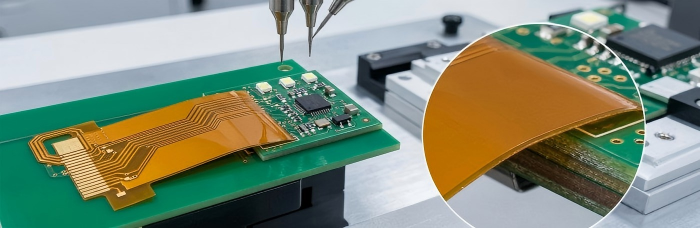
Rigid flex PCBs are a combination of rigid and flexible circuit boards. The inflexible parts support the components like processors, sensors and memory chips, while the flexible parts enable the circuit to bend or fold without breaking the electrical connections.
Rigid-flex PCBs eliminate the need for cables and connectors connecting multiple boards and bring together all components into one “rigid-flex” system. This will enhance the reliability and space efficiency.
Polyimide materials are typically used for flexible sections and can handle repeated bending, vibration, and thermal stress. These attributes make rigid-flex PCBs ideal for medical applications such as wearables which move throughout the day.
Rigid-Flex PCBs for Wearable Medical Devices
Wearable medical devices have key properties that are required in modern devices. They need to be:
Small and lightweight
Easy to put on and take off for long periods of time
Can withstand continuous movement.
Energy efficient
High trust in critical healthcare applications.High trust in critical healthcare applications.
All these needs are being met at the same time with rigid-flex PCB technology.
Compact Design & Miniaturization
A major obstacle for wearable medical technology is to place sophisticated electronics in very small form factors. Wearables typically have a small amount of space available for all of the sensors, wireless communication modules, processor, battery, and power management system.
Rigid-flex PCBs enable 3D designs that enable the circuits to be folded into compact shapes. It enables engineers to get smaller products with still very high functionality. This miniaturized design is ideal for various devices, including hearing aids, smart patches, and continuous glucose monitors.
Less connectors and wiring also contribute to the valuable space and weight savings inside the device.
Improved Reliability
Medical wearables need to perform over time and provide accurate information. Standard PCB assemblies with numerous connectors and cables are more prone to mechanical failure due to vibration, bending or repeated motion.
The rigid-flex PCBs enhance reliability by reducing the number of mechanical interfaces. Fewer loose connections or signal interruptions as everything is inside of one structure.
In healthcare settings, such as where patients require ongoing monitoring or device failures could impact patient safety, this reliability is particularly crucial.
Better Patient Comfort
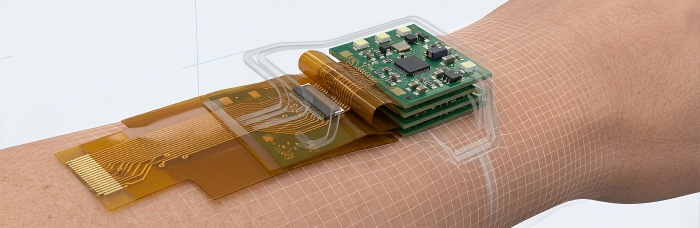
Wearable healthcare products need to be comfortable. The lighter, more flexible and less conspicuous the medical wearables, the more likely patients will have them consistently.
Manufacturers could manufacture thinner, more ergonomic devices that fit the human body as a natural shape with rigid-flex PCBs. The flexible sections allow them to bend around curved surfaces like your wrist, chest or arm, making them more comfortable and easier to use.
The flexibility is a huge boon for long-term wearables like ECG patches or rehabilitation monitors, as it enhances the patient experience.
Applications in Wearable Medical Technology
Many medical wearable devices and portable healthcare systems are currently coming to the market with rigid-flex PCBs.
Health Monitoring Devices
Wearable monitors will collect key health metrics like heart rate, blood oxygen, body temp and blood pressure. These devices can be compact and reliable electronic systems that are designed to operate continuously.
Rigid-flex PCBs enables high density circuit integration and provide light weight and comfortable handling.
Chronic Glucose Monitoring Systems
Continuous glucose monitors (CGMs) are based on small electronics and wireless technology that give continuous glucose readings. Flexible PCB structures can be used to achieve a comfortable fit on the skin surface with stable performance.
Hearing Aids
Modern hearing aids are equipped with electronics which are extremely small and compact. Rigid-flex PCBs allow manufacturers to create the lightweight, durable hearing device that offers greater signal stability.
Implantable Medical Devices
Flexible circuit technology is also used in certain types of implantable devices such as pacemakers and neurostimulators. Flexible PCB sections provide mechanical stress reduction and facilitate miniaturized and highly reliable designs.
Rehabilitation and Motion Tracking Systems
Wearable rehabilitation devices are devices incorporating wireless communications and motion sensors to track the movements of the patient and his/her recovery. Rigid-flex PCBs provide flexibility and enable these to move with the body naturally.
Design Challenges
While rigid-flex PCBs have many benefits, there are also a number of engineering challenges.
Mechanical Stress
If flexible areas are not designed properly then copper traces can be damaged with repeated bending. The engineers have to perform a careful calculation of the bend radius and stress distribution to make sure that it is durable in the long term.
Thermal Management
With the rapid developments of smaller, more powerful wearables, keeping them cool is harder to manage. Thermal design is key to ensure device performance and patient comfort.
Manufacturing Complexity
The rigid-flex PCB manufacturing process is more complicated than the traditional PCB manufacturing process due to the use of rigid and flexible materials in a single PCB. Precision fabrication and assembly processes are needed to achieve quality and reliability.
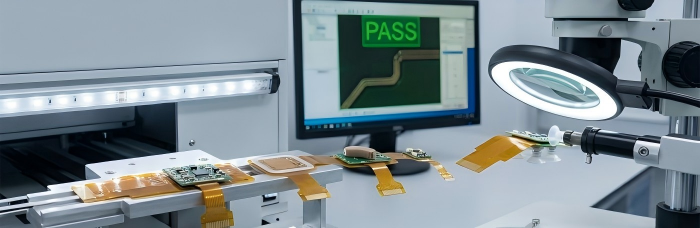
While the manufacturing of rigid-flex PCBs is more complex, rigid-flex PCBs can lower total system assembly costs due to the reduction in connectors, cables and hand wiring.
Rigid-flex PCBs are a critical component in medical devices that are now worn by patients. They are known for their flexibility, compactness, durability, and electrical reliability, making them suitable for use in advanced healthcare equipment. Medical products smaller, lighter, more patient-friendly are achieved by rigid-flex PCB technology, from wearable biosensors to smart monitoring patches, hearing aids to implantable systems. Despite design and manufacturing hurdles, rigid-flex PCBs are still paving the way for innovation throughout the medical electronics sector.
PCBCart offers rigid-flex PCB solutions for high-reliability applications. By providing excellent engineering assistance, high-quality control, state-of-the-art manufacturing and precision, PCBCart aids customers in realizing their complex wearable medical design into reliable product. For medical device innovation to accelerate, you need professional rigid-flex PCB manufacturing—contact PCBCart today.


