



In today’s electronics manufacturing landscape, High‑Mix Low‑Volume (HMLV) production has become the standard for industrial controls, medical devices, automotive prototypes, aerospace components, and custom equipment. Unlike mass‑production lines that focus on long runs of identical boards, HMLV involves frequent product changeovers, diverse board designs, small batch sizes, and often highly complex assemblies with fine‑pitch components, dense layouts, and strict reliability requirements. In this environment, 100% Automated Optical Inspection (AOI) is not merely an option—it is a mandatory quality and operational necessity. Partial inspection, sampling, or manual visual checks simply cannot meet the consistency, precision, traceability, and cost‑control demands of modern HMLV PCB assembly.
What Makes HMLV Production Unique and Challenging?
HMLV environments are defined by high product variety, low batch quantities, frequent changeovers, and custom specifications. Each batch may feature unique board layouts, component types, assembly processes, and quality criteria. Key challenges include:
· Frequent new product introductions (NPIs) with limited run times
· Extreme board complexity, including HDI, 01005/0201 components, and fine‑pitch devices
· Stringent regulatory and reliability standards for medical, automotive, and aerospace applications
· High sensitivity to defects, as rework, scrap, and field failures disproportionately erode margins in small batches
· Inconsistency risks from manual inspection under frequent setup changes
Under these conditions, any inspection gap directly threatens quality, compliance, and profitability. Sampling or occasional checks leave boards unvetted, creating avoidable risks that scale rapidly in low‑volume settings.
Why 100% AOI Is Non‑Negotiable for HMLV PCB Assembly
1. Eliminates Human Error and Inconsistency in Frequent Changeovers
Manual inspection relies on visual checks under magnification, which suffer from fatigue, distraction, and variability—especially when operators switch between dozens of different board designs. Humans typically miss 15–30% of small defects after short periods of repetitive work, and performance degrades sharply with frequent task shifts. AOI systems deliver constant, repeatable accuracy regardless of batch size or changeover frequency. Using high‑resolution cameras and multi‑angle lighting, modern AOI detects defects as small as 10 μm, far beyond human visual capability. For HMLV, this consistency ensures every board meets the same strict standards, even across dozens of unique designs.
2. Catches Costly Defects Early to Protect Margins
In HMLV, the cost of late‑stage failure is exponentially higher than in mass production. Industry data shows that fixing a defect at assembly is 10× more expensive than at the bare board stage, while field failures cost 100× more. Common defects include:
· Solder bridges, insufficient/excess solder, and cold joints
· Missing, reversed, misaligned, or tombstoned components
· Lifted leads, polarity errors, and coplanarity issues
· Solder mask voids, scratches, and registration errors
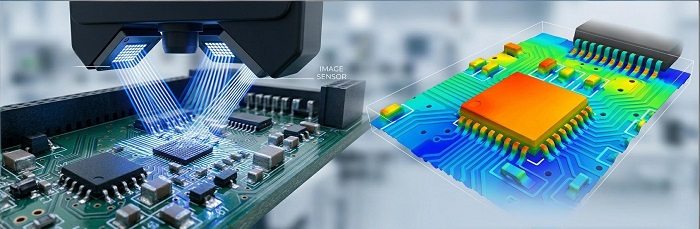
100% AOI intercepts these issues immediately after solder reflow before downstream assembly or functional test. Early detection slashes rework labor, material waste, and delays—critical for preserving margins in small‑batch orders where per‑unit costs are already elevated.
3. Ensures Compliance and Traceability for Regulated Industries
Many HMLV applications serve medical, automotive, aerospace, and industrial sectors bound by strict standards: IPC Class 2/3, ISO 13485, IATF 16949, UL, CE, and customer‑specific requirements. These standards mandate:
· Full inspection records for every unit
· Real‑time process monitoring
· Complete traceability of defects and corrections
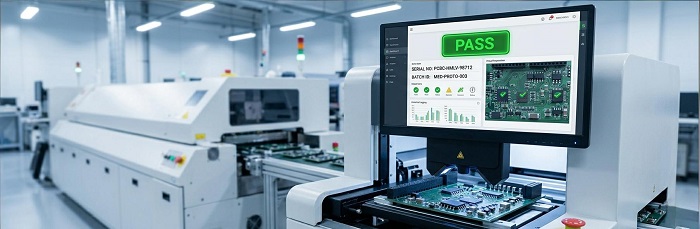
100% AOI automatically logs inspection data, images, and pass/fail results for every board, creating auditable records that simplify compliance and customer audits. Sampling or manual checks cannot provide this level of traceability, putting certifications and customer approvals at risk.
4. Delivers Unmatched Efficiency Despite Frequent Changeovers
A common misconception is that AOI is too slow or complex for HMLV. Modern systems are designed for rapid programming and quick changeovers, with intuitive CAD import, template libraries, and automated parameter setup. While initial programming takes time, 100% inspection per batch is far faster than manual checks across multiple small runs. AOI inspects a typical board in 5–10 seconds, while manual inspection often takes several minutes per unit. This speed keeps lines flowing, reduces work‑in‑progress, and supports faster order fulfillment—key advantages in agile HMLV operations.
5. Reduces Hidden Operational Risks Unique to Low Volumes
In low‑volume production, every board matters. A single defective unit can delay an entire order, damage customer trust, or trigger costly returns. Unlike mass production where defects can be absorbed statistically, HMLV has no buffer for avoidable failures. 100% AOI acts as a zero‑tolerance quality gate, ensuring no defective board proceeds to shipment. This risk mitigation is especially critical for prototype, pre‑production, and mission‑critical builds where reliability is non‑negotiable.
6. Supports Continuous Improvement Across Diverse Products
AOI systems generate rich defect data that reveals process trends—even across mixed product lines. Manufacturers can identify recurring issues such as solder paste misalignment, component placement errors, or reel‑specific defects, then adjust processes proactively. In HMLV, where learning opportunities per design are limited, this data‑driven feedback lifts overall quality and yield across the entire production portfolio.
Addressing Common HMLV AOI Misconceptions
Myth: AOI is too expensive for small batches
Fact: While upfront investment exists, long‑term savings dominate. AOI reduces labor, rework, scrap, and warranty costs. One machine often replaces 3–5 manual inspectors, delivering rapid ROI in high‑mix environments.
Myth: Programming time kills HMLV productivity
Fact: Modern AOI uses CAD‑driven programming, modular templates, and shared libraries to cut setup time by 50% or more. Many systems support offline programming, so changeovers do not stop production.
Myth: 3D AOI is unnecessary for HMLV
Fact: 3D AOI adds height measurement to detect lifted components, uneven solder, and coplanarity issues invisible to 2D systems. For complex HMLV boards, 3D AOI delivers near‑zero escape rates and lowers false calls.
Conclusion: 100% AOI Is Indispensable for HMLV Success
For High‑Mix Low‑Volume PCB assembly, 100% AOI is mandatory—not a discretionary upgrade. It eliminates human error, ensures consistent quality across diverse batches, slashes defect‑related costs, guarantees compliance and traceability, boosts line efficiency, and mitigates the unique risks of low‑volume production. As boards shrink, components miniaturize, and quality standards tighten, HMLV manufacturers cannot compete or satisfy customers without full AOI coverage.
To achieve reliable, cost‑effective, and compliant HMLV PCB assembly, you need a partner that integrates 100% AOI inspection into every stage of production—from prototypes to low‑rate runs.
Partner with PCBCart for HMLV Excellence
PCBCart specializes in High‑Mix Low‑Volume PCB manufacturing and assembly with 100% inline AOI inspection as a standard quality practice. Our advanced 2D + 3D AOI systems detect micro‑defects, support rapid product changeovers, maintain full traceability, and align with IPC Class 2/3, industry, and automotive standards. Whether you need prototype runs, small‑batch production, or complex mixed‑technology assemblies, PCBCart delivers consistent, defect‑free boards tailored to your HMLV needs. With end‑to‑end quality control and responsive service, PCBCart is your trusted partner for reliable, efficient, and compliant HMLV PCB solutions.
Helpful Resources
• Comparison of AOI, ICT and AXI and When to Use Them during PCB SMT Assembly
• Common Defects in PCB Assembly and How to Prevent Them
• PCB Design Elements Influencing SMT Manufacturing
• Some Handy Methods in Evaluating SMT Assembler’s Capabilities
• Free DFM Check


