



Open alternates on commodity passives that a few datasheet numbers fully describe, and lock every IC, connector, crystal, and any part whose behavior those numbers don’t capture. Record that decision in the BOM line by line, with an approved vendor list (AVL) column and a substitution rule, so your PCB assembly partner never has to guess. Anything outside the AVL then goes through a written approval process, because a substitution nobody signed off on is a design change, not a purchasing decision.
Why specify alternates up front?
Because the moment a part goes short is the worst time to decide what can replace it. When we kit a job and a 10 kΩ 0402 resistor is out of stock at the first source, a BOM line that says “any manufacturer meeting spec” lets our buyer source an equivalent without waiting for an engineering reply. A line with one MPN and no rule leaves the build waiting while emails go back and forth across time zones.
Alternates also affect how a line is priced. A line with three approved sources can be quoted against whatever is in stock. A single-MPN line ties your price and schedule to one supplier’s inventory, and in high-mix, low-volume work a single source can mean paying for a full reel to use a few hundred pieces.
There’s a less obvious reason too. Your AVL tells us what you have already qualified. We don’t know which parts were on the boards that passed your thermal soak or your EMC pre-scan, and we can’t work that out from the BOM. If a second-source component has been through your validation, write it down. If it hasn’t, it shouldn’t appear on the BOM as an approved alternate, however equivalent it looks on paper.
Which parts are safe to open, and which should stay locked?
Open a part when everything that matters about it fits in a short parametric description that any reputable manufacturer’s equivalent will meet. Lock it when it carries behavior the summary specs don’t capture, such as loop stability, firmware dependencies, a mating interface, or a safety certification.
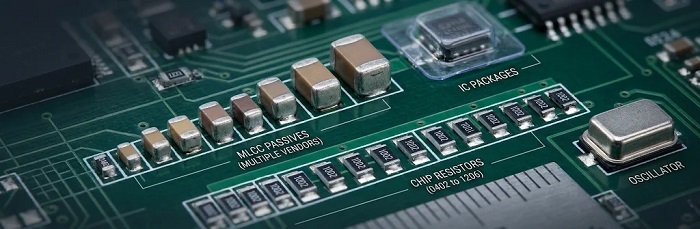
Chip resistors are the easiest case. Value, tolerance, power rating, TCR, and case size describe a general-purpose thick-film resistor completely. The exceptions are current-sense resistors, anti-surge and pulse-rated parts, high-voltage dividers, and precision thin-film networks, where construction matters as much as the value.
MLCCs look just as simple, and mostly are, but two things catch people out. First, capacitance loss under DC bias varies between manufacturers, even for parts with identical ratings, so a 10 µF X5R 0603 from one vendor may deliver noticeably less effective capacitance at your rail voltage than one from another vendor. For bulk decoupling that rarely matters. For regulator output capacitors, filters, and timing circuits, either specify C0G or lock the part. Second, body thickness varies between vendors in the same case size, which matters under shield cans and in tight enclosures.
Polymer, tantalum, and aluminum electrolytic capacitors should be locked, or at least restricted to an AVL, when they sit on a regulator output. ESR affects loop stability, and two parts with the same capacitance and voltage rating can behave very differently there.
We’d always lock power inductors. Saturation current, core material, and shielding all affect efficiency and emissions, and none of that is obvious from the inductance value alone. Ferrite beads are similar: two beads with the same impedance at 100 MHz can have very different impedance curves across the rest of the frequency range.
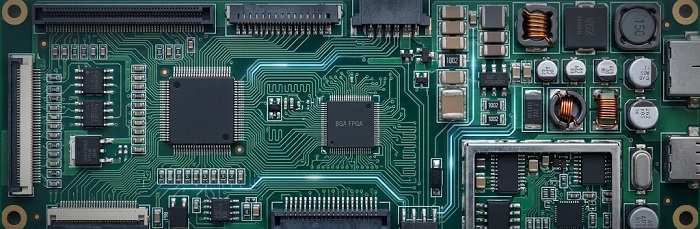
ICs stay locked, including “pin-compatible” ones. Two LDOs with identical pinouts can differ in stability with ceramic output capacitors, in enable thresholds, and in start-up behavior. Microcontrollers and FPGAs carry firmware dependencies. Crystals need load capacitance, ESR, and drive level matched to your circuit, and oscillators can differ in start-up time and output characteristics. Connectors have to mate with a specific cable or mating half. Fuses, optocouplers, Y capacitors, and varistors in an isolation or protection path are often tied to a safety agency listing, and swapping them can invalidate the certification.
| Part type | Default rule | What the BOM must specify | Lock when |
|---|---|---|---|
| Chip resistor | SPEC OK | Value, tolerance, power, TCR, case size | Current sense, pulse/anti-surge, high voltage, precision thin film |
| MLCC | SPEC OK or AVL ONLY | Value, voltage, dielectric, case size, max height if constrained | Regulator output, filter, timing, under a shield |
| Electrolytic / polymer / tantalum | AVL ONLY | Value, voltage, max ESR, size, temperature rating | On a regulator output or in a hold-up circuit |
| Power inductor | LOCKED | Full MPN | Always |
| Ferrite bead | AVL ONLY | Impedance, current rating, DCR | RF paths, switching-supply filters |
| Small-signal diode / transistor | AVL ONLY | MPN list with confirmed pinout | SOT-23 or similar packages where pin assignments vary by vendor |
| ICs (LDO, MCU, FPGA, ADC, driver) | LOCKED | Full MPN, including suffix | Always |
| Crystal / oscillator | LOCKED | Full MPN | Always |
| Connector | LOCKED | Full MPN | Always |
| Safety and isolation parts | LOCKED | Full MPN | Always |
The small-signal row deserves a second look. A generic switching diode in SOT-23 sounds like a commodity part, but pin assignments in that package are not universal. List the alternates you have actually checked rather than writing “or equivalent.”
How should you mark alternates and the AVL in the BOM?
Keep one row per line item, and give alternates and the substitution rule their own columns. Alternates buried in a free-text notes field get missed, especially when the BOM is imported into a purchasing system that drops the notes.
Here is a layout that works well:
| Item | RefDes | Description | Mfr 1 / MPN 1 | Mfr 2 / MPN 2 | Rule | Critical parameters |
|---|---|---|---|---|---|---|
| 1 | R1–R12 | RES 10K 1% 1/16W 0402 thick film | Mfr A / MPN | (blank) | SPEC OK | ±100 ppm/°C or better |
| 2 | C4, C7 | CAP 10µF 16V X7R 0805 | Mfr B / MPN | Mfr C / MPN | AVL ONLY | Max height 1.25 mm |
| 3 | C22 | CAP 22µF 25V polymer | Mfr D / MPN | Mfr E / MPN | AVL ONLY | ESR ≤ value from your design |
| 4 | U3 | LDO 3.3V 500mA | Mfr F / full MPN | (blank) | LOCKED | (blank) |
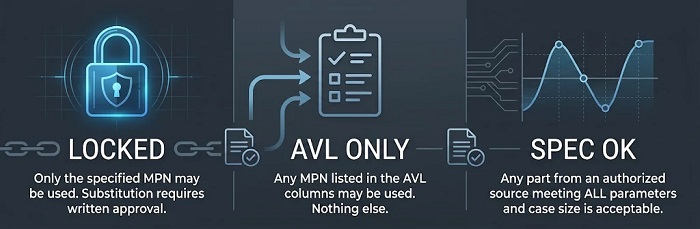
Three rule codes cover nearly every line. LOCKED means only the listed MPN may be used unless you approve a change in writing. AVL ONLY means any MPN listed in the manufacturer columns may be used, and nothing else. SPEC OK means any part from an authorized source that meets every parameter in the Description and Critical parameters columns, in the same case size.
SPEC OK only works if the description is complete. “10k” gives us nothing to check against. “RES 10K 1% 1/16W 0402 thick film” plus a TCR limit gives a clear pass/fail test for any candidate part. If you can’t write that description with confidence, the line probably shouldn’t be SPEC OK.
Treat AVL changes as BOM changes. Adding or removing an approved alternate should trigger a new BOM revision, so the build record shows which AVL was in effect. Larger teams often maintain the AVL in their PLM system and export it into the BOM, while smaller teams usually keep it in the BOM directly. Either approach works, as long as the file we build from carries the current list.
Mark DNP parts explicitly, either in the rule column or in a dedicated column. A blank rule cell on an unpopulated position tends to trigger an unnecessary purchasing question.
How should substitute approval work with your CM?
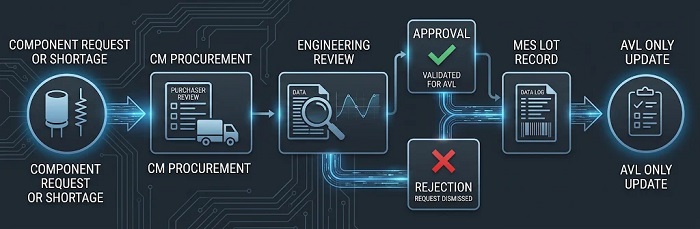
Anything the BOM rule doesn’t already cover needs written approval before the part is ordered. Our standing policy is simple: we make no substitutions without your approval.
The process usually looks like this:
A line is flagged during BOM review, or later during purchasing because of a shortage, an end-of-life notice, or a packaging minimum that doesn’t fit the order quantity.
We send you the proposed part and its datasheet for review. Before approving it, your engineer should compare it with the original part for electrical parameters, package and footprint, MSL and reflow rating, and RoHS status.
Your engineer approves the part, rejects it, or approves it with conditions, such as “this build only” or “approved permanently.”
The decision is recorded against the job and the BOM revision. Permanent approvals should be added to your AVL at the next revision so the same question doesn’t come up again.
The alternate part’s lot and date code are recorded in our Smart MES, so boards built with it can be identified later.
Name one approver on your side for electrical equivalence. A buyer can approve a price or a source, but a buyer alone shouldn’t approve a different capacitor on a regulator output. When nobody is clearly responsible for approvals, requests sit in inboxes and the schedule takes the hit.
Keep “this build only” and “permanent” approvals separate. A one-time deviation to get through a shortage is a reasonable call. Letting it quietly become the default part is how BOMs drift away from what was validated.
Who owns the AVL in practice depends on the service model. In turnkey work we buy from authorized distributors by default. If you ask us to purchase from channels you recommend instead, responsibility for the quality of those parts rests with that channel. In consigned builds, your team buys the parts, so your purchasing team enforces the AVL before the kit ships. Make sure your buyer works from the same AVL revision as the BOM you send us. We build with the parts we receive and have no way of knowing whether a substitution was approved on your side.
What are the risks of an open BOM?
An open BOM hands design decisions to whoever is buying parts that week. That’s acceptable for a 0402 pull-up resistor. It isn’t acceptable for the parts that determine whether the board behaves the same way from build to build.
The most common problem is variation within a single build. If a SPEC OK line is filled from two manufacturers to make up the quantity, some boards carry one MLCC and the rest carry another. For most positions nobody will ever notice. For a filter or timing capacitor, you now have two populations in the field and no easy way to tell them apart without lot records.
It affects assembly as well as function. A different package height can change how a part sits under a shield or next to a connector. Polarity markings on diodes and tantalum capacitors differ between manufacturers, so 3D AOI inspection programs may need updating when a part’s appearance changes. A different MSL level changes floor-life handling. None of this is hard to manage, but each change needs to be known before the build, not discovered during it.
Then there’s certification. If your product is listed with a safety agency, the listing often names specific components. Swapping a Y capacitor or a fuse for an “equivalent” can leave the listing out of step with the product you ship.
Finally, “any equivalent” must never mean “any source.” Opening the MPN is one decision. Opening the supply channel is a separate one, and that’s where counterfeit risk comes in. A SPEC OK rule should always assume authorized sourcing unless you state otherwise in writing.
The opposite failure is real too. A fully locked BOM, with one MPN on every passive, is fragile. It works until the first shortage, and then every line becomes an approval request.
Before releasing a BOM for production, we suggest running through these checks:
Every line has a rule code, including DNP positions.
Every SPEC OK line has a description complete enough to test a candidate part against.
Every AVL ONLY alternate has actually been through your validation.
Every IC, crystal, connector, and safety part is LOCKED with its full MPN and suffix.
One named approver is listed for substitution requests.
The AVL revision matches the BOM revision.
FAQ
Can one build mix two approved manufacturers on the same line?
By default, yes, if both are on the AVL or the line is SPEC OK. If you need consistency within a build, for example to keep a filter response uniform across a batch, add “single manufacturer per build” to the rule column and confirm with our engineering team at the quote stage whether your quantity can be sourced that way.
Does an approved alternate need a new first article?
If the alternate changes package height, body outline, or polarity marking, we’d recommend first article inspection on the first build that uses it. Placement programs and inspection settings may need updating, and it’s better to confirm placement and solder joints on a few boards than across a full lot.
Is an AVL the same thing as an obsolescence plan?
No. An AVL lists what you’ve already qualified today. An obsolescence plan looks ahead at lifecycle status, last-time-buy windows, and which locked parts have no qualified second source. A locked, single-source IC that is late in its lifecycle is the line to watch, because no BOM rule will help once it’s discontinued.
Should prototype and production BOMs use different rules?
Prototype BOMs can reasonably be looser on general-purpose passives to save time. Lock anything that will be part of your qualification testing from the first build, though. If prototype boards pass with one capacitor and production ships with another, your test results describe a different product.
Can a SPEC OK line be filled with a different case size?
No. The footprint is fixed by your layout, so case size is part of the specification. A part in a different case size counts as a substitution, and like any other substitution it needs your approval, even when the electrical values match.
Helpful Resources
• Full Turnkey PCB Assembly
• Precision Component Sourcing and Obsolescence Management for Long-Lifecycle Life Sciences Devices


