



In the fast-paced world of electronics manufacturing, High-Mix, Low-Volume (HMLV) production has become a cornerstone for businesses catering to customized, niche, and rapidly evolving product demands. From automotive ECUs and medical devices to industrial automation components and specialty consumer electronics, HMLV manufacturing thrives on flexibility—adapting to frequent product changeovers, small batch sizes, and diverse specifications. But with this flexibility comes unique quality control challenges, and one process stands out as non-negotiable: Functional Testing (FCT). Far from a “nice-to-have” step, FCT is the backbone of reliable HMLV production, ensuring products perform as intended, mitigating risks, and protecting your brand’s reputation. Let’s dive into why FCT is indispensable for HMLV manufacturers—and how it can turn complexity into a competitive advantage.
What is FCT, and Why Does It Matter for HMLV?
First, let’s clarify: Functional Testing (FCT) is a system-level validation process that evaluates an assembled electronic product’s performance under simulated real-world conditions. Unlike In-Circuit Testing (ICT)—which focuses on component-level defects like short circuits, open traces, or incorrect part placement—FCT tests the product as a complete system. It verifies critical functions: power consumption, communication interface reliability, signal processing, software-hardware compatibility, and adherence to design specifications.
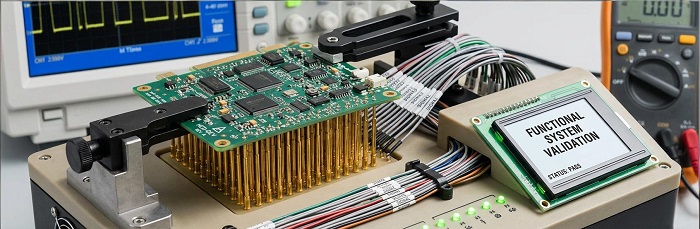
For HMLV production, this distinction is game-changing. High-volume manufacturing relies on standardized designs, where ICT can catch most physical defects early. But HMLV is defined by variability—each batch may have unique firmware, custom interfaces, or specialized use cases. ICT alone can’t uncover nuanced system-level flaws: a misconfigured communication port, a firmware glitch that only appears under load, or a performance inconsistency in extreme temperatures. These defects, if uncaught, lead to field failures, costly recalls, and lost customer trust—risks HMLV manufacturers (often operating with tighter margins and smaller customer bases) simply can’t absorb.
FCT Solves HMLV’s Biggest Challenge: Variability
The defining trait of HMLV production is frequent changeover—switching between products with vastly different functional requirements. A medical device PCB, for example, has strict safety and precision standards that differ entirely from an industrial sensor or automotive control module. FCT’s greatest strength is its adaptability: it can be customized with tailored test scenarios, input signals, and performance benchmarks for every product variant.
Consider automotive ECUs, a classic HMLV product (with hundreds of variants for different vehicle models and features). FCT simulates input from vehicle sensors, actuators, and control systems, validating critical functions like engine management, safety system activation, and in-car communication. This level of real-world simulation ensures even small batches meet automotive safety standards—something component-level testing can’t achieve. Similarly, for medical devices, FCT simulates clinical operating conditions to verify accuracy and reliability, a requirement for regulatory compliance.
In HMLV, design errors are more common than in high-volume production (where designs are refined over time). FCT acts as a final gatekeeper, catching issues like incorrect firmware programming or untested features before products leave the factory. This adaptability isn’t just convenient—it’s essential for delivering consistent quality across diverse product lines.
FCT Reduces Costs and Boosts Efficiency (Yes, Really)
A common misconception about FCT is that it’s time-consuming and costly, slowing down HMLV’s need for agility. The opposite is true: when integrated strategically, FCT reduces waste, minimizes rework, and shortens time-to-market—key goals for HMLV manufacturers.
In HMLV, reworking a faulty product after assembly or shipping is disproportionately expensive. Small batch sizes mean fixed rework costs are spread across fewer units, eating into profits. FCT, conducted post-assembly but pre-shipping, catches defects when rectification is still cost-effective. A firmware error detected during FCT can be fixed with a simple update; the same error discovered by a customer requires recalls, repairs, and shipping costs—plus irreparable brand damage.
FCT also generates actionable data. By analyzing test results, manufacturers can identify recurring design flaws, optimize component selection, or refine production processes for future batches. This closed-loop quality control is gold for HMLV, where rapid design iteration is key to staying competitive. For example, if FCT reveals a consistent communication issue with a specific component, manufacturers can switch to a more reliable part—reducing defects in future batches and streamlining production.
Regulatory Compliance: FCT is Non-Negotiable for Industry Standards
Many HMLV markets—medical, aerospace, automotive, industrial automation—are governed by strict regulatory standards. These standards mandate comprehensive testing and documentation to prove product safety and performance. FCT is the primary way to generate this documentation.
Take medical devices: strict industry standards require rigorous functional testing to ensure devices perform safely in clinical settings. Automotive electronic components also demand thorough validation of all safety-critical functions to meet industry safety expectations. For HMLV manufacturers, where each product variant may have unique compliance requirements, PCBCart’s FCT services produce detailed, product-specific test reports to support your regulatory submissions. Without this level of FCT documentation, you risk non-compliance, fines, production halts, and legal liability.
Beyond compliance, FCT test reports serve as a tangible demonstration of quality— a competitive edge in markets where customers demand full traceability and reliability.
FCT + ICT: A Unified Quality Control Framework
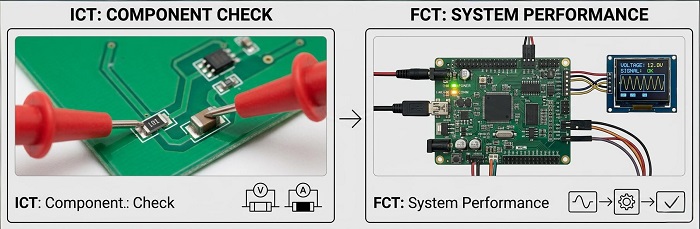
FCT isn’t meant to replace ICT—it works alongside it to create a comprehensive quality control system. ICT catches physical defects early (e.g., bad solder joints, missing components), reducing the number of faulty units that reach FCT. FCT then validates system-level functionality, uncovering defects ICT can’t detect. This two-tiered approach is perfect for HMLV, where changeovers increase the risk of both component-level and system-level errors.
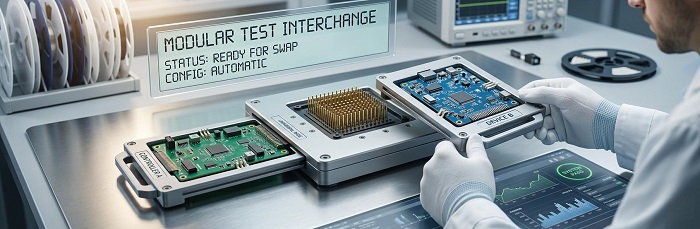
Modern manufacturing platforms integrate ICT and FCT into a unified workflow, using modular test fixtures and automated systems to streamline changeovers. This integration reduces equipment footprint, ensures consistent quality across product variants, and balances rigor with agility—critical for HMLV success.
Modern FCT: Adapting to HMLV’s Evolving Needs
As HMLV manufacturing becomes more digital and automated, FCT is evolving too. Today’s FCT systems leverage automation, AI, and modular fixtures to enhance flexibility and speed:
Automated FCT: Quickly reconfigurable for different product variants, reducing changeover time and boosting agility.
AI-Powered FCT: Analyzes test data in real time, identifying emerging failure patterns and alerting teams to issues before they escalate—critical for small-batch production where delays impact delivery schedules.
Modular Fixtures: Standardized interfaces and interchangeable components let manufacturers adapt testing setups without investing in new equipment, lowering costs and increasing flexibility.
These advancements make FCT not just a quality control step, but a driver of innovation in HMLV production.
PCBCart: Your Partner for FCT-Driven HMLV Production
At PCBCart, we understand the unique challenges of HMLV manufacturing—and why FCT is non-negotiable. As a trusted provider of PCB and PCBA manufacturing services, we integrate FCT into our quality control process as part of our comprehensive PCBA testing capabilities, aligned with our core service scope.
Our customizable FCT solutions are designed to support the flexibility of HMLV production, adapting to your specific functional requirements for small-batch PCB and PCBA orders (1-10,000+ pcs). We integrate FCT with ICT and AOI testing—key components of our quality assurance process—to create a unified workflow that catches defects early, consistent with our PCB and PCBA manufacturing expertise. Our testing capabilities complement our full range of services, including custom PCB fabrication, SMT/THT assembly, and component sourcing.
For HMLV manufacturers, FCT isn’t just a requirement—it’s an opportunity to stand out. With PCBCart as your partner, you benefit from our focus on reliable PCB and PCBA production, backed by our quality control processes including FCT, to deliver consistent, high-performance products that build customer trust.
Ready to elevate your HMLV quality control with FCT? Contact PCBCart today to learn how our FCT solutions, integrated with our core PCB and PCBA manufacturing services, can support your unique production needs.
Helpful Resources
• PCB Assembly Process
• PCB Design File Checklist
• How to Order PCB Assembly Services
• Evaluating SMT Assembler Capabilities


