



In contract manufacturing terms, EVT is your prototype assembly build, DVT is a pilot run built on the process you intend to use in production, and PVT is the first low-volume lot built from a released document package. Each gate should close on evidence rather than on a calendar date, and each handoff between your team and the factory is mostly controlled files going one way and build records coming back the other. Below is what each gate should check and what data should move between your team and your assembly partner at each step.
How do EVT, DVT and PVT map to prototype, pilot and low-volume builds?
The three stages differ in what they are trying to prove, and the build quantity follows from that, not the other way round. A useful rule: build as many units as your test plan for that stage will consume, plus spares for failure analysis.
EVT (engineering validation test) answers one question: does the circuit work? At this stage the design is expected to move. A bodge wire, a resistor value changed on the bench, a substitute part because the specified one was out of stock are all normal, provided each one is written down. Whether paste for a prototype board should be jet-printed or printed through a stencil is worth deciding early, because it changes what you have to redo when the layout moves.
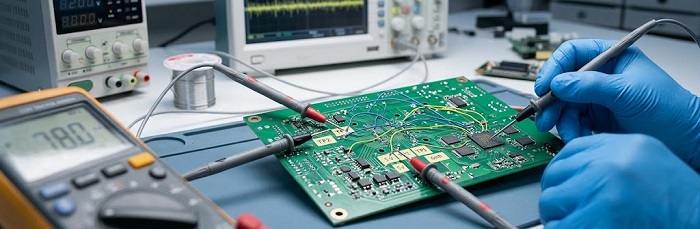
DVT (design validation test) asks whether the design, now frozen at a release-candidate revision, meets its specification as a product. Environmental, reliability and compliance pre-checks usually run on your side or at a lab you choose. On the build side, what matters is that the boards you test were built the way production boards will be built. If DVT units are hand-touched or jet-printed while production will run through a stencil and a locked reflow profile, your test data describes a slightly different product than the one you will ship.
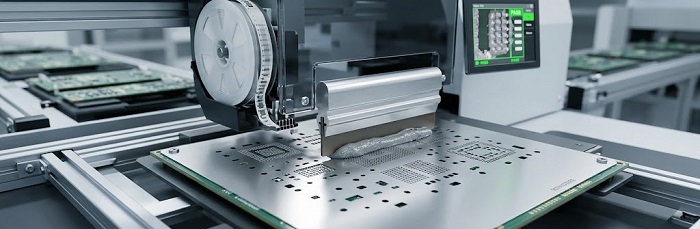
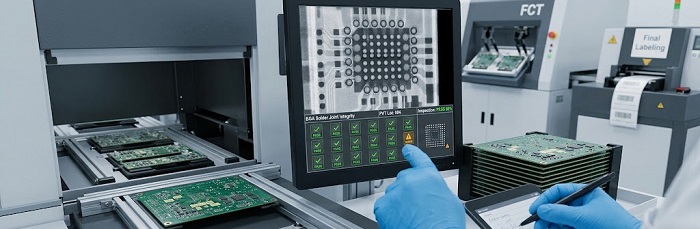
PVT (production validation test) moves the focus from the design to the process. The question becomes whether the line can build this board repeatedly from released documents, with nobody from your engineering team standing beside it. For most high-mix, low-volume programs, PVT is simply the first real low-volume order, built under normal production conditions.
| Stage | Typical build | What it proves | What may still be provisional | Exit decision |
|---|---|---|---|---|
| EVT | Prototype assembly | The circuit functions | Layout, BOM values, part choices, paste method | Freeze a release-candidate revision |
| DVT | Pilot run on production process | The product meets its spec | Packaging, labeling, test fixture refinements | Release the design |
| PVT | First low-volume lot | The process repeats from documents | Nothing that affects form, fit or function | Release for repeat low-volume orders |
What should each gate check before you move on?
A gate is ready to close when every open item has an owner and a written disposition, not when every item has been fixed. Some issues are rightly deferred; the problem is the ones nobody decided on.
EVT exit
At EVT exit most of the evidence is yours: every functional block powered and exercised, a defect log with a disposition for each line (change the layout, change the BOM, or accept as is), and a BOM with no placeholder entries for parts that affect footprint or layout. Every assembly inquiry we receive gets a free DFM and DFA check, and the findings from that check at EVT are the cheapest corrections the program will ever make. They should be either built into the next revision or consciously deferred.
One question worth asking before a DVT build: did any EVT board need rework to function? If it did, that rework is a design change. It belongs in the next revision of the Gerbers or BOM, not in a build note that someone has to remember three months later.
DVT exit
DVT exit is where most programs either keep their schedule or lose it. The board revision you test should be the one you intend to release. The stencil, paste deposition method, reflow profile and any through-hole soldering fixtures should all be the production versions, not stand-ins.
Test coverage also has to be decided here: what flying probe or functional test covers, what it does not, and what the pass criteria are. Component substitutions made during EVT need to be closed, either reverted or written into your approved vendor list as alternates. And the first article inspection on the DVT build should be reviewed and signed off by your team rather than left waiting in an inbox.
Workmanship class belongs in this gate too. Our standard boards are built to IPC Class 2. If your product specification calls for something different, raise it at the quote stage and confirm with our engineering team what applies to your board, so the DVT units reflect the acceptance criteria you will actually inspect against.
PVT exit
PVT exit is about repeatability and records. The lot should be built from a released package with no hand-marked redlines. The functional test fixture and procedure should have been proven on real production boards, not only on DVT units. Agree in advance which build and inspection records you need for the lot, for example materials used and AOI or X-ray results for BGA and bottom-terminated parts, and confirm with our engineering team what can be supplied for your board.
What counts as an acceptable PVT result is your decision and belongs in your exit criteria, written down before the build starts. Packaging and labeling should match what your receiving inspection expects, and open engineering changes at PVT exit should be zero or formally deferred to a later revision with your quality lead's signature.
What data changes hands at each handoff?
Each handoff runs both ways: you send frozen design data and acceptance criteria, and you should get back build evidence that your next gate review can use.
| Handoff | Buyer sends to PCBCart | What to ask your assembly partner for |
|---|---|---|
| Into EVT | Gerber or ODB++ files, drill files, BOM with manufacturer part numbers, centroid file, assembly drawing, special build notes | DFM/DFA findings, questions on part availability or substitutes, build notes |
| Into DVT | Revised files with revision letter on every item, approved alternates, programming files, test specification, workmanship and inspection requirements | First article inspection report, X-ray results for BGA and bottom-terminated parts, a list of any deviations |
| Into PVT | Released document package, functional test procedure and fixture, packaging and labeling spec | First article report for the lot, lot build and inspection records, records of any nonconformance |
| Repeat low-volume orders | Engineering change notices, forecast or call-off quantities | Lot records, confirmation that the change was implemented |
A common failure is not a missing file but a mismatched one: Gerbers at revision C, a BOM exported from revision B, and an assembly drawing nobody updated. Putting the revision letter in the file name of every item and in the BOM header prevents most of this. It sounds pedantic until a pilot build has to be stripped and redone. For a build with us, which records beyond the DFM findings and first article report can be supplied is a question to settle with our engineering team at quote stage.
First article inspection is carried out on the first one or two completed boards before the rest of the lot runs. You can approve from images we email, or ask us to ship the article board so your team can inspect it in your own lab. A physical board makes sense when your DVT inspection needs measurements or cross-sections; for repeat lots of a stable design, images are often enough.
Where do NPI programs usually stall?
Most stalls come from information that arrives late or out of sync, rather than from the assembly process itself.
Parts are the first trap. A component that was easy to buy for a prototype can turn out to be end-of-life, on allocation, or available only in cut tape when the low-volume lot needs reels. A lifecycle and availability review of the BOM belongs before DVT, because a substitution after DVT puts you back into a partial DVT.
Test tends to arrive late. Functional test fixtures are often designed after the PVT boards are already built, which leaves finished boards waiting on a shelf. If the fixture is on the critical path, start it alongside the DVT build so it can be proven on DVT units.
Soft gates cause the most expensive delays. Moving into PVT with known design issues marked "fix in PVT" means you are trying to validate a process on a design that is still changing, and when something fails you cannot tell which one caused it. This is rarely worth it unless the open item is cosmetic, such as a silkscreen correction.
Approval latency is the quiet one. A first article report or a deviation request that sits unanswered holds the lot. Naming a single approver per gate, with a backup, usually removes more schedule risk than any change on the shop floor.
Gate checklist: what must be closed at EVT, DVT and PVT exit?
Use this as a starting point for your own gate review template and adjust the entries to your product's risk.
| Check item | EVT exit | DVT exit | PVT exit |
|---|---|---|---|
| Design revision status | May still change | Release candidate frozen | Released, no redlines |
| BOM placeholder entries | Allowed for non-layout parts | None | None |
| Approved alternates | Optional | Every substitution used is listed | Listed and controlled |
| DFM/DFA findings | Logged | Closed or deferred with sign-off | Closed |
| Rework needed to function | Logged as design changes | None | None |
| Paste deposition method | Jet print or prototype stencil | Production method | Production method |
| Reflow profile | Developed | Locked for release revision | Locked and recorded per lot |
| Test and through-hole fixtures | Not required | Production versions built | Proven on production boards |
| First article inspection | Optional | Required, signed by buyer | Required for the lot |
| X-ray of BGA and BTC parts | As needed | Requested where present | Records kept per lot |
| Functional test procedure | Bench, informal | Written, pass criteria defined | Proven and released |
| Build and inspection records | Build notes | Records agreed with supplier | Lot records as agreed |
| Packaging and labeling | Any | Draft specification | Matches buyer receiving spec |
| Open engineering changes | Expected | Few, each with an owner | Zero or formally deferred |
FAQ
Can we combine DVT and PVT into one build?
Only if post-EVT changes were minor and the build already runs on the production process. The trade-off is that a failed unit is harder to trace to design or process, so release the design before the build starts.
Our prototypes were built elsewhere. What do we need to send for a DVT build with you?
Send the full file package plus your EVT defect log and any rework notes. Our free DFM/DFA check runs on your files again, so it may raise points an earlier build did not.
What happens if an engineering change arrives during a PVT lot?
Agree a cut-in point, keep boards built before and after it separate, and decide what happens to the earlier ones. First ask whether the change can wait for the next lot.
If production moves between your Hangzhou and Thailand factories, do we repeat PVT?
Yes, treat it as a new PVT at the receiving site: same documents, new first article, and a fresh check of profile and fixtures. Tell us at quote stage which site the program should run in.
Who should sign off each gate on the buyer side?
One named owner per gate, each with a backup: usually the NPI engineer for EVT, design or quality engineering for DVT, and supplier quality for PVT. Give that name to your assembly partner so first article approvals go to the right person.
Helpful Resources
• Prototype PCB Assembly
• RFQ Preparation Checklist: What Information Your EMS Partner Needs for an Accurate HMLV Quote
• Low-Volume PCB Assembly (HMLV)
• Electronics Manufacturing Services


