



The global electronics manufacturing services (EMS) industry is undergoing a profound structural shift in 2026. For more than two decades, offshore production has been the default model for printed circuit board assembly (PCBA), box build, component sourcing, and full product manufacturing, driven by low labor costs and large‑scale production capacity. Today, the calculus has changed dramatically. Electronics brands and OEMs are re‑evaluating local sourcing, nearshoring, and reshoring against traditional offshore manufacturing, prioritizing supply chain resilience, speed to market, quality control, and regulatory compliance over pure cost reduction. This rebalancing is redefining how electronics products are designed, sourced, produced, and delivered worldwide.
The Traditional Offshore Model in Electronics Manufacturing
Offshore electronics manufacturing has long centered on low‑cost regions with mature component ecosystems, skilled assembly labor, and scalable factory capacity. Companies moved production to these hubs to cut assembly costs, access dedicated surface‑mount technology (SMT) lines, and leverage large‑volume component purchasing power. Key benefits included:
Dramatic labor and operational cost savings, often 30–40% below domestic production
Access to dedicated EMS infrastructure, including high‑mix SMT lines, automated optical inspection (AOI), and functional testing
Scalable output for mass‑market consumer electronics, industrial controls, and telecom hardware
Proximity to global electronic component supply bases
For years, these advantages made offshore assembly the standard for high‑volume, low‑mix electronics. But beginning in the early 2020s, systemic risks and structural changes began to weaken the dominance of this model.
Why Electronics Manufacturing is Shifting in 2026
The shift toward local and regional sourcing in electronics is driven by five industry‑specific forces that directly impact production reliability, speed, and profitability.
1. Supply Chain Resilience for Critical Electronics Components
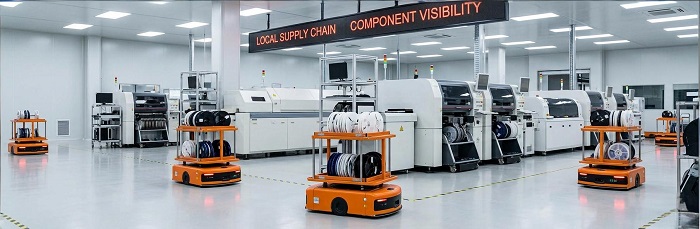
Electronics manufacturing depends on just‑in‑time (JIT) delivery of semiconductors, capacitors, connectors, and integrated circuits. Long offshore lead times, port congestion, and component shortages have caused costly production halts and delayed product launches. Local and nearshore sourcing drastically cuts transit times, improves component visibility, and reduces the risk of stockouts for mission‑critical electronics such as industrial equipment, medical devices, automotive electronics, and IoT hardware.
2. Speed to Market and Shorter Product Lifecycles
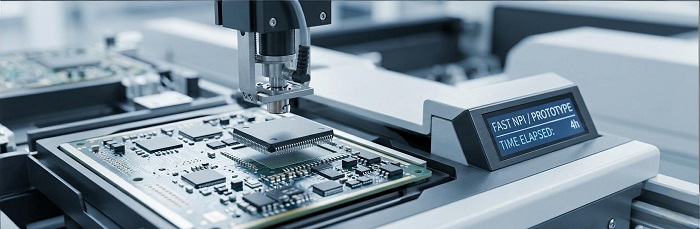
Consumer and industrial electronics now have shorter lifecycles, requiring faster prototyping, quicker NPI (New Product Introduction), and agile volume ramp‑up. Local EMS providers support rapid design revisions, on‑site testing, and same‑day or next‑day turnaround for low‑volume and high‑mix builds. Offshore manufacturing, by contrast, often involves 6–12 week lead times that conflict with fast‑paced market demands. In 2026, speed has become a competitive advantage equal to cost in many electronics segments.
3. Quality and Regulatory Compliance Requirements
Medical electronics, automotive systems, aerospace components, and industrial controls demand strict quality management, traceability, and regulatory adherence (such as ISO 13485, IATF 16949, and IPC standards). Local manufacturing simplifies audits, on‑site quality control, and real‑time process monitoring. Offshore production can create gaps in traceability, communication delays, and higher risks of non‑compliance, leading to rework, product recalls, and reputational damage.
4. Rising Total Landed Costs in Offshore Hubs
While labor costs remain lower in traditional offshore regions, total landed costs have risen sharply due to wage inflation, logistics fees, tariffs, and energy expenses. Tech and assembly wages in major offshore hubs are projected to increase 7–9% annually in 2026. Shipping, insurance, and customs delays further erode savings. Meanwhile, automation in local EMS facilities—including robotic SMT, automated testing, and AI‑driven process control—has improved productivity and narrowed the cost gap.
5. ESG and Sustainability Pressures
Electronics buyers and investors increasingly prioritize low‑carbon supply chains, ethical labor practices, and reduced e‑waste. Local and nearshore production cuts carbon emissions from long‑distance shipping, supports circular manufacturing, and improves transparency in material sourcing. Many OEMs now use sustainable production as a key criterion when selecting EMS partners, accelerating the shift away from long‑haul offshore manufacturing.
Local Sourcing vs. Offshore: The 2026 Electronics Balance
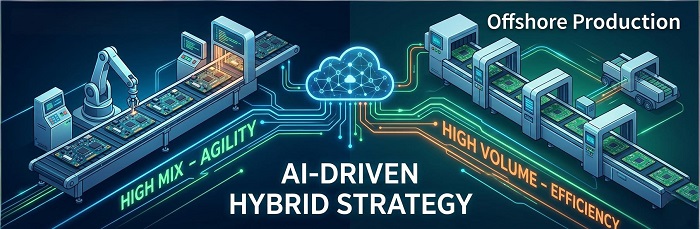
Electronics manufacturers in 2026 are no longer choosing “either/or” but building hybrid strategies that match production model to product type:
Local / nearshore for high‑mix, low‑volume builds, rapid prototypes, medical electronics, automotive PCBA, and time‑sensitive products
Offshore for high‑volume, mature, low‑mix consumer electronics with stable demand and longer lifecycles
This balanced approach maximizes agility, cost efficiency, and resilience across the product portfolio.
How Advanced Electronics Manufacturers Are Adapting
Leading EMS providers are investing in automation, AI‑driven quality control, and flexible production lines to support both local and global models. Smart factories with real‑time component tracking, digital twins, and automated testing enable consistent quality whether production is local or offshore. Data analytics improve demand forecasting, inventory management, and risk mitigation across distributed supply chains.
Navigating the Electronics Manufacturing Shift with a Trusted Partner
For electronics OEMs and brands navigating the local versus offshore transition in 2026, partnering with an experienced, flexible EMS provider is critical. PCBCart specializes in end-to-end electronics manufacturing services tailored to today’s fast‑changing supply chain needs. From rapid PCB prototyping and SMT assembly to full box build, component sourcing, and global logistics, PCBCart supports both local‑agile and offshore‑efficient models to match your product, volume, and timeline.
With strict IPC‑A‑610 quality standards, advanced automated inspection, and transparent supply chain management, PCBCart helps you balance speed, cost, and resilience in an era of constant change. Whether you need fast local NPI, scalable offshore production, or a customized hybrid solution, PCBCart is your reliable partner for electronics manufacturing success in 2026 and beyond.
Helpful Resources
• Making the Best of China's Electronics Manufacturing Resources to Obtain Optimal Balance between Cost and Performance
• How Much Does PCB Assembly Cost: A Complete Guide From Basics to Optimization Approaches
• How to Evaluate A PCB Manufacturer or A PCB Assembler
• Essential Principles of PCB Sourcing
• Full Feature PCB Manufacturing


