



A serious DFM check reviews Gerbers, drill files, and BOM against manufacturability rules before fabrication begins, and industry data consistently shows roughly 10-20% of first-time design submissions contain at least one issue that would cause a yield problem or outright failure if built as-submitted. But "thorough" isn't really about how many rules a supplier's software checks — it's about what happens after an issue is found, which is the part a rules list can't tell you.
The Five Passes a Real Check Actually Runs
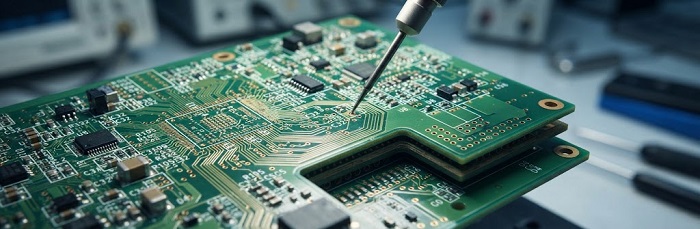
A DFM check works through a design in distinct passes, each catching a different category of manufacturability risk: drill-layer checks (through, buried, and blind vias against the fabricator's process capability), signal and mixed-layer checks (trace and space minimums, annular ring size), power/ground layer checks, solder mask checks (clearance, silkscreen-over-pad conflicts), and silkscreen checks. On top of these bare-board checks, a thorough review also confirms footprint-to-datasheet matching for every component and validates panel dimensions and utilization if the design will be panelized.
Knowing this list is useful, but it's also exactly why the list alone doesn't answer the "how thorough" question. Automated rule-checking software can run all five passes reliably and still miss the thing that actually matters to you: whether a human being looks at what the software flagged and decides whether it's worth bothering you about.
The Real Differentiator: Communication, Not Just Detection
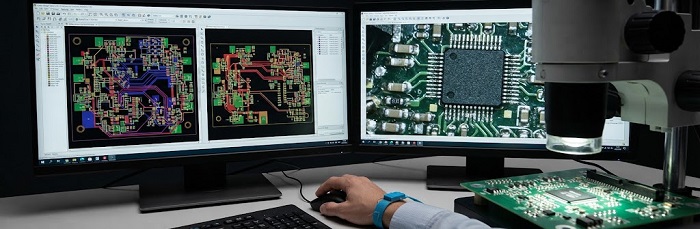
The distinguishing factor between a superficial DFM pass and a genuine one isn't whether issues are caught — automated tools catch most rule violations reliably regardless of supplier. It's whether flagged issues are actively communicated back to you for confirmation, versus silently auto-corrected based on the supplier's assumption of your intent. A supplier that pauses production and emails you about any deviation from submitted files is protecting your yield; one that "fixes" things quietly is passing design risk straight through to your finished boards without your knowledge, even though their DFM software technically caught the same issue.
A Test You Can Actually Run Yourself
You don't have to take a supplier's word for how their DFM process handles ambiguity — you can find out directly on your first submission. Before sending your files, note one genuinely borderline element in your own design: a trace that's close to but not clearly below the minimum spacing, a footprint that's a reasonable but non-obvious interpretation of a datasheet, an annular ring that's tight but not definitively out of spec. Don't flag it yourself. Submit normally, and watch what comes back.
A supplier with a real DFM process will flag that specific element and ask you about it directly, describing what they found and why it's borderline. A supplier running DFM as a formality will either miss it entirely, or "fix" it silently without ever mentioning it to you — and you'll only find out by comparing your original files against what actually got built. This single test tells you more about DFM thoroughness in one submission than any amount of asking a supplier to describe their own process, because it's observing behavior rather than requesting a description of it.
This works precisely because it's cheap to run and hard to game. You're not asking a supplier to demonstrate their process on command, which any sales team can rehearse an answer for — you're watching how they actually handle a real ambiguous case in the normal course of quoting your design. If you're evaluating multiple suppliers for a first order, running the same borderline design element through each of them and comparing what comes back is one of the more genuinely informative side-by-side tests available to you, and it costs nothing beyond the time you'd spend quoting anyway.

DFM Review Quality Comparison
| DFM Practice | Risk Level | What It Looks Like |
|---|---|---|
| No DFM check, built as submitted | High | Issues surface only after boards are built |
| Silent auto-correction | Medium | Supplier assumes intent, doesn't confirm |
| Flagged, held for buyer confirmation | Low | Production paused until you approve each deviation |
| Flagged with written DFM report provided | Lowest | Full documentation trail for future reorders |
A Real-World Scenario
A first-time buyer submits files converted from a proprietary CAD format into Gerber. The conversion introduces several subtle errors invisible on casual review. The supplier's DFM process catches these during file review — a pattern specifically cited in independent buyer reviews as a valuable, trust-building signal — and holds production while contacting the buyer to correct the drawing before any board is fabricated. This single interaction is often what converts a first-time buyer into a recurring customer, since it demonstrates the DFM step is a genuine gate, not a formality. Notice that the value here wasn't the software catching the error — automated tools would likely have flagged it regardless of supplier. The value was that a person on the supplier's side treated the flag as something worth a conversation rather than a judgment call to quietly resolve alone.
Common Mistakes When Evaluating DFM Thoroughness
• Asking "do you do DFM checks" instead of asking what happens when one finds something. Nearly every supplier will answer yes to the first question; the second question is where the real process difference shows up.
• Assuming a clean DFM pass means the design has no manufacturability risk. A clean pass means nothing violated the rules the software checked — it doesn't mean a human reviewed anything borderline that technically passed but is still worth a second look.
• Not requesting the DFM report on designs that pass cleanly. A report gives you a documented baseline to compare against on reorders, which matters more than it seems the first time a supplier flags something different on a repeat order.
• Treating DFM turnaround time as the main quality signal. A fast DFM turnaround is convenient, but speed alone doesn't tell you whether flagged issues get communicated or silently resolved — the two matter independently.
Checklist for Evaluating a Supplier's DFM Process
• Ask whether DFM review happens before or after payment is finalized.
• Ask the typical DFM turnaround time — commonly 24-48 hours for standard 2-8 layer designs.
• Confirm the supplier will hold production and contact you by email for any deviation, rather than guessing at intent.
• Request a written DFM report even if your design passes cleanly, as a record for future reorders.
• For recurring designs, keep the DFM report on file to speed up confirmation on repeat orders.
FAQs
1. If I disagree with a DFM-flagged fix, who has final say? You do — it's your design; a supplier should present the issue and a recommendation, not make the final call unilaterally on anything affecting form, fit, or function.
2. Does a passed DFM check protect me if a defect surfaces after production anyway? Not entirely — DFM catches design-rule violations, not every possible failure mode, so a clean pass reduces risk without eliminating it.
3. Can I request DFM checking against my specific fabricator's process capability, not generic rules? Yes, and it's worth asking for explicitly — generic rule sets are more conservative than a specific fabricator's actual capability, so a tailored check can sometimes clear a design generic rules would flag.
4. If I make a small BOM edit after DFM already ran, does DFM need to be re-run? Often yes, especially for footprint or placement-adjacent changes — ask whether your supplier automatically re-triggers DFM on post-review edits or whether you need to request it.
5. Does DFM check catch issues that would only show up during assembly, not fabrication? Partially — DFM proper focuses on the bare board; assembly-specific risks are typically covered by a related but distinct DFA (Design for Assembly) review.
Helpful Resources
• The Critical Difference Between DFM and DFA in PCBA Manufacturing
• Key Elements Affecting PCB Manufacturability
Ready to see what a DFM check catches on your own design? Request a PCB Assembly quote and ask for the DFM report before production starts.


