



In the modern electronics manufacturing, designing the circuit that should be working is not the sole component of a successful PCBA project. The complexity of electronic products, combined with their increased sophistication, shrinking size, and speed, require manufacturers to make sure that a PCB can be manufactured in an efficient and reliable manner at scale. Even a well designed product can face production delays, a high rate of product defects and increased costs if there is a lack of manufacturing planning.
That is why it is important to consider Design for Manufacturability (DFM) and Design for Assembly (DFA) during PCB design. The two words are frequently used in a similar context, but have different functions in manufacturing. DFM is concerned with whether the PCB can be manufactured economically, and DFA is concerned whether components can be accurately and reliably assembled on the board.
Understanding DFM in PCB Manufacturing
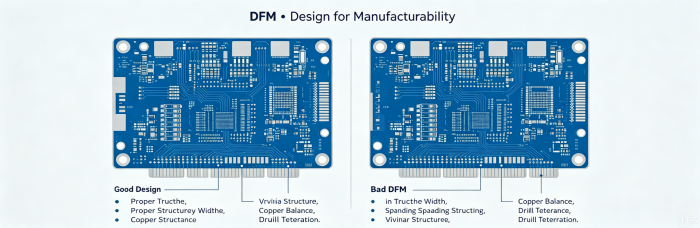
Design for Manufacturability (DFM) is designing a PCB to be manufactured in stable, efficient and cost effective processes. DFM is all about the bare board, without any components.
Even if a PCB design works perfectly in simulation, it can cause problems when it is manufactured, if it is too complex. Abnormally tight traces, inadequate spacing, unsupported drill sizes and/or poor copper balancing can result in lower yield and greater risk in production.
The typically reviewed considerations of DFM include trace width and spacing, via structures, drill tolerances, solder mask clearance, layer stack up configuration, material selection, and panelization strategy. These details directly impact on the quality and consistency of the fabrication.
If the traces are too narrow or too close together, for instance, the etching process can result in shorts or opens. The imbalance of copper in the board can cause warping during lamination, and the design of the annular rings may cause unreliable drilling.
The goal of DFM is to discover and resolve these problems prior to the start of manufacture. The implementation of a good DFM strategy enables manufacturers to improve yield and minimize scrap rates, minimize redesigns, and maintain stable production quality.
Understanding DFA in PCB Assembly
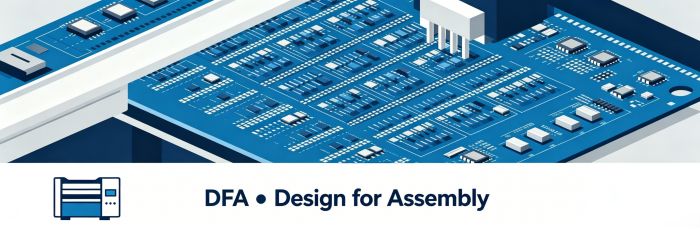
DFM is specifically for the process of fabricating the PCB, Design for Assembly (DFA) is for the process of mounting, soldering, inspection and testing of electronic components during assembley.
The modern PCB assembly is highly automated, which involves SMT placement machines, reflow soldering systems, Automated Optical Inspection (AOI) and X-ray inspection equipment. DFA assures that the PCB design is optimized for these assembly processes.
The factors that need to be taken into account for DFA are as follows: Component spacing, orientation consistency, pick and place accessibility, soldering compatibility, thermal relief design, test point accessibility, inspection visibility.
A poor assembly design can lead to major manufacturing problems. Solder bridging in reflow soldering can occur when components are placed very close together. Machines may take longer to program due to inconsistent component orientation and placement errors may occur. There might also be limited opportunity for inspection and repair due to limited space.
A good DFA strategy helps to increase the efficiency of the assembly, lower manual interventions, boost the first pass yield, and increase the overall reliability of the product.
The Key Difference Between DFM and DFA
DFM and DFA are similar but they address different manufacturing problems.
DFM considers the manufacturability and reliability of the bare PCB. The ability of the fabricated board to be assembled accurately and consistently is a focus of DFA.
In simple terms:
DFM optimizes PCB manufacturing.
DFA optimizes PCB assembly.
Even when a PCB is correct for DFM, it is possible for the assembly process to be faulty due to a poorly designed component placement. Similarly, if manufacturing constraints are not considered a board designed for ease of assembly can still be difficult and expensive to build.
PCB fabrication and PCB assembly are two completely different processes, with different equipment and production risks; therefore, it is necessary to collaborate between DFM and DFA during the development process to ensure the success of the PCBA project.
Why Both DFM and DFA Matter
Reducing cost is probably one of the greatest advantages of doing DFM and DFA early. Issues found after prototyping or when mass production is underway are much more costly to correct than mass production design problems.
By making the boards more consistent and reducing defects, as a result of fabrication, DFM contributes to reducing waste. By reducing automated placement, soldering and inspection costs, DFA reduces the cost of assemblies. They can all help manufacturers to cut down on scrap, re-work, downtime and engineering changeovers.
DFM and DFA also enhance production yield. Problems during fabrication, including inadequate spacing, lack of stack-up planning, and voids in via structures, can affect the quality of the board. From an assembly perspective, problems like tombstoning, misalignment and solder bridging can reduce first pass yield and slow assembly lines.
DFM combined with DFA will help to lower scrap, rework, redesign and delays in production, while enhancing first pass yield and overall manufacturing stability.
Supporting Automated Manufacturing
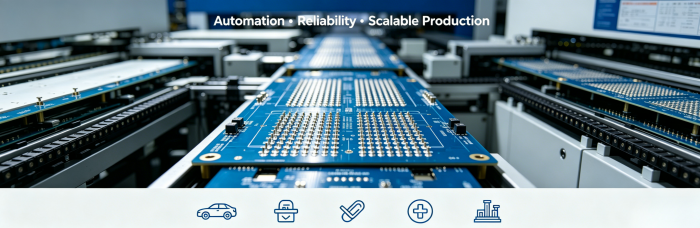
Automation is a vital part of the electronics industry. In addition to the need for large quantities of parts, high-speed SMT lines and automated inspection machines demand PCBs that can be manufactured with a machine.
DFM ensures processes remain stable for production of the PCB and DFA ensures that they can be efficiently assembled using automated equipment. Optimization for automation typically provides higher inspection accuracy, higher placement accuracy and higher throughput.
With the ongoing developments of PCB designs in terms of density and miniaturization, manufacturing-friendly PCB design has become more and more significant for scalable production.
Improving Product Reliability
The quality of the product is directly associated to the manufacturing quality and hence the reliability of the product in the long term. Solder fatigue, electrical short or undetected product defects caused by poor thermal design or insufficient spacing or access for inspection can decrease product life.
Combining DFM and DFA in the design process can enhance the reliability of solder joints, minimize defect frequencies, and contribute to the development of more reliable PCBAs for industries like automotive electronics, industrial automation, telecommunications, and medical devices.
DFM and DFA are not interchangeable concepts. They are complementary engineering methods to solve different problems of PCB manufacturing.
DFM guarantees the efficient, consistent and cost-effective production of a PCB. DFA allows components to be assembled correctly, inspected correctly and tested correctly. They work together to minimize production risks, maximize yield, speed product development and increase product quality for manufacturers.
The complexity and miniaturization of PCB technology keep advancing, and companies that keep in mind both product design and reliability from the outset will have a huge edge over the rest in production efficiency and long service life.
For businesses seeking dependable PCB fabrication and assembly services, working with an experienced manufacturing partner is essential. PCBCart offers complete PCBA solutions and PCB manufacturing to help customers maximize manufacturability, enhance assembly efficiency and ensure stable and high-quality production results.
Helpful Resources
• PCB Manufacturing Process A Step-by-Step Guide
• Printed Circuit Boards Assembly Process
• Design for Manufacture and Assembly of PCBs and General Rules it Conforms to
• How to Evaluate A PCB Manufacturer or A PCB Assembler
• PCB Design Tips to Better Take Advantage of PCBCarts PCB Assembly Capabilities


