



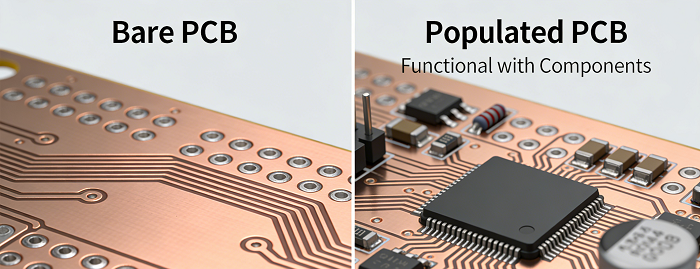
In the electronics manufacturing landscape, a populated circuit board—also known as an assembled PCB—is a core building block of nearly all electronic devices, from everyday consumer tech to industrial and commercial equipment. Simply put, a populated circuit board is a bare printed circuit board (PCB) that has been fitted with all required electronic components, soldered into precise positions, and made fully functional for integration into electronic systems. Unlike a bare PCB, which only features conductive traces, pads, vias and a non-conductive substrate (the foundational “skeleton” of a circuit), a populated PCB is an active, working component that enables the flow of electrical signals and the execution of specific electronic functions.
At its core, the creation of a populated circuit board relies on two critical, interconnected processes: PCB fabrication (the production of the bare PCB itself) and PCB assembly (PCBA) (the mounting and soldering of components onto the fabricated bare board). These two steps are the backbone of turning a design concept into a physical, functional circuit board, and the quality of both directly impacts the performance, reliability and longevity of the final populated PCB.
Key PCB Assembly Technologies for Populated Circuit Boards
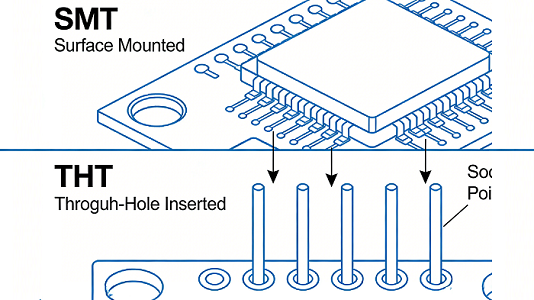
The assembly of a populated circuit board uses precision manufacturing techniques, with two primary technologies defining the process—Surface Mount Technology (SMT) and Through-Hole Technology (THT)—and many projects utilizing a mixed-technology approach to meet specific design and functional requirements. Both methods are foundational to creating high-quality populated PCBs, and the right choice depends on the application’s needs for component size, density, structural stability and performance.
· Surface Mount Technology (SMT): The most widely used assembly method for modern populated PCBs, SMT involves mounting tiny, compact components directly onto the surface of the bare PCB (no drilled holes required for component leads). This enables high component density, making it ideal for miniaturized electronic devices, and supports automated, high-volume production with micron-level precision. SMT is the go-to choice for most consumer, commercial and industrial electronics where space efficiency and scalability are key.
· Through-Hole Technology (THT): A traditional assembly method where component leads are inserted through pre-drilled holes in the bare PCB and soldered to the opposite side. THT creates an extremely strong mechanical and electrical bond, making it perfect for components that require high structural stability—such as power connectors and large capacitors—used in industrial, automotive and heavy-duty commercial applications.
The Standard Workflow for Creating a Populated Circuit Board
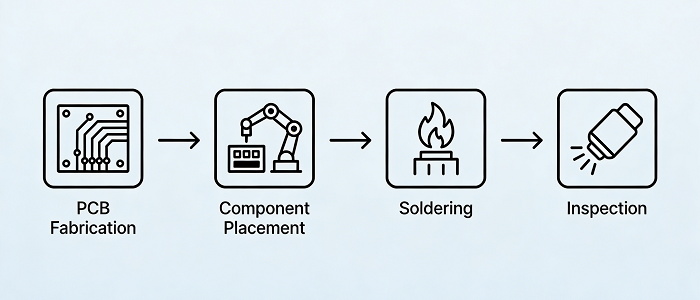
Crafting a functional, reliable populated circuit board is a streamlined, quality-controlled process that combines precise PCB fabrication and assembly, with strict inspections at every stage to ensure performance. The end-to-end workflow aligns with core PCB manufacturing capabilities, and follows these key steps:
1. PCB Fabrication: First, a custom bare PCB is manufactured to exact design specifications—including substrate cutting, copper cladding, photolithography, etching, drilling and plating—creating the conductive pathways and physical structure that will connect electronic components.
2. Pre-Assembly Inspection: The fabricated bare PCB is rigorously inspected for defects (e.g., broken traces, misdrilled holes, poor plating) to ensure it is a viable platform for component mounting.
3. Component Placement & Soldering: For SMT, solder paste is applied to the PCB’s pads via a stencil, and automated pick-and-place machines position components with precision before the board is passed through a reflow oven to melt the solder and form permanent bonds. For THT, wave soldering or manual precision soldering secures components inserted through the PCB, creating strong, durable connections.
4. Post-Assembly Cleaning & Inspection: Excess solder and flux residue are removed to prevent corrosion and short circuits. The board then undergoes thorough inspection—including automated optical inspection (AOI)—to catch any defects like misplacement, cold solder joints or reversed polarity.
5. Functional Testing: Final electrical and functional testing verifies the populated PCB performs its intended task to design standards, ensuring it is ready for integration into larger electronic systems.
Why Quality Populated PCBs Depend on Expert Fabrication & Assembly
A high-quality populated circuit board is only as good as the PCB fabrication and assembly behind it. Even minor defects in the bare board or assembly process can render a PCB non-functional, leading to costly production delays, device failure and lost efficiency. For this reason, partnering with a manufacturer that excels in both PCB fabrication and PCB assembly is essential—one that combines state-of-the-art equipment, rigorous quality control, and expert engineering to deliver populated PCBs tailored to your exact design and application needs.
Whether you need prototyping for a new electronic design, small-batch custom populated PCBs, or high-volume assembly for mass production, the right manufacturing partner ensures your populated circuit boards meet the highest standards of precision, reliability and performance.
PCBCart is a trusted provider of professional PCB fabrication and PCB assembly (PCBA) solutions, specializing in creating high-quality populated circuit boards for a wide range of electronic applications. Leveraging advanced SMT and THT assembly capabilities, precision fabrication processes, and strict quality control at every stage, pcbcart delivers custom populated PCBs tailored to your unique design specifications—from prototype to high-volume production. With a focus on customer-centric service, fast turnaround times and consistent quality, pcbcart is your one-stop partner for all your PCB fab and assembly needs, turning your electronic design concepts into fully functional populated circuit boards.
Get an Instant Quote for High-Quality PCB Assembly
Helpful Resources
• A Comprehensive Introduction of PCBA
• Printed Circuit Boards Assembly Process
• Design PCBs to Better Take Advantage of PCBCart's PCB Assembly Capabilities
• Prototype PCB Assembly Service
• PCB Component Sourcing Service


