



The High-Mix Low-Volume (HMLV) Electronics Manufacturing Services (EMS) industry is no exception to this rule: supply chain strategy is more than an auxiliary activity in the company; it is a fundamental ability that directly influences the results of the delivery process, the cost management, and the customer satisfaction. In contrast to high-volume manufacturing, HMLV settings require dealing with highly complex product lines, changing demand patterns, and engineering changes, under tight timelines.
As an EMS service provider, it is important to consider supply chain strategies to stay competitive. Efficiency is not just the reduction of costs anymore, but also agility, resilience, visibility, and collaboration. An effective strategy is one that allows the providers to react promptly to the needs of the customers whilst keeping operations at par in an ever-changing unpredictable global world.
Meeting Customer-Centric Objectives with Supply Chain Strategy
At HMLV EMS, each project may vary greatly in the product design, component needs, and delivery requirements. Thus, the initial process when assessing a supply chain strategy is identifying how much the strategy is customer-centric.
Key considerations include:
Capability to enable rapid prototyping and NPI (New Product Introduction)
Able to cover small batch and tailored orders
Regularity of meeting on-time delivery (OTD) goals
A good strategy needs to smoothly convert customer needs into supply chain activities. To illustrate, when customers are concerned with speed and not cost, the supply chain needs to focus on shorter lead times, instead of bulk purchasing discounts.

Measuring End-to-End Visibility and Information Flow
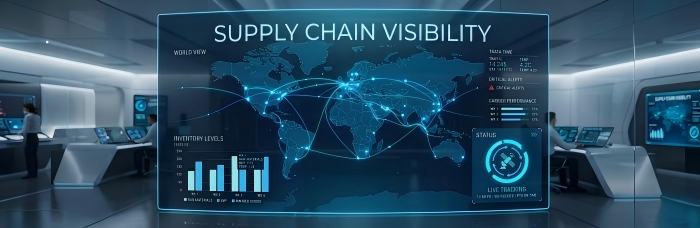
One of the most important aspects of supply chain efficiency is visibility, particularly when HMLV environments are involved, thousands of unique components can be considered. Lack of visibility may cause unforeseen shortages, delays in production and high costs.
As a provider, assessment must be based on:
Live tracking of component stock and availability
ERP, MES, and procurement system integration
Multi-level supplier networks transparency
The high-visibility systems enable a team to detect risks in time, including possible shortage of components or logistics delays, and respond proactively to correcting the situation.
Assessing Supplier Network Strength and Collaboration
Suppliers are an extension of the operations of an EMS provider. Supplier reliability is even more important in the HMLV manufacturing where specialized components are a typical practice.
Evaluation criteria include:
Performance of suppliers to make on-time deliveries
Stability of quality and defect levels
Response to alterations in engineering and emergent orders
Degree of team planning and communication
Good supplier relationship leads to better accuracy of forecasting, less variability in lead time, and better risk management. Long-term efficiency requires strategic partnerships as opposed to transactional relationships.
Maximizing Inventory to be Efficient and Resilient
HMLV EMS inventory management involves a delicate attitude. Conventional lean systems that reduce inventory are not always applicable since there is uncertainty in supply and risk of obsolescence of components.
Evaluation should examine:
The inventory turnover ratio and carrying costs
Incidence of stockouts and production disabilities
Ranges of surplus and obsolete (E&O) inventory
Buffering of long lead times or high-risk parts
A balanced approach involves Just-in-Time (JIT) and selective Just-in-Case (JIC) strategies to reduce risk without excessive cost increase.
Enhancing Operational Efficiency Across the Value Chain
The effectiveness of any supply chain strategy is directly measured by the operational efficiency. Complex workflows, frequent changeovers, and manual processes are some of the inefficiencies that can be experienced in HMLV EMS.
Assessment must be based on:
Time of production cycle and throughput
Determination of bottlenecks either in procurement or manufacturing
Extent of standardization and automation of processes
Logistics and material management
The concepts of lean can be very useful, but it needs to be modified to suit the flexibility of HMLV production.
Testing Supply Chain Resilience and Risk Management
The recent occurrences of disruptions in the world have proven that efficiency without resilience cannot be sustained. In the case of HMLV EMS providers, a single shortage of a component can stop the production.
Evaluation should address:
Access to multi-sourcing strategies
Diversification of suppliers in terms of geography
Presence of backup procedures of vital elements
Quickness of postponed disruptions
Risk assessment tools and scenario planning can be used to recognize the areas of vulnerability and enhance preparedness.
Leveraging Digital Transformation and Advanced Technologies
One of the enablers of supply chain efficiency is digitalization. At HMLV EMS, a high complexity environment, advanced technologies are essential to supporting decision-making and implementation.
Evaluation criteria include:
Adoption of AI-controlled demand predicting applications
Integration through the use of digital supply chain platforms
Procurement, inventory and order processing automation
Implementation of performance analytics
The technologies enhance precision, minimize human input, and facilitate quicker responses to evolving circumstances.
Setting up Continuous Improvement and KPI Monitoring
The strategies in the supply chain are bound to keep on changing to ensure that they are effective. The fixed solutions soon become obsolete when HMLV environment is dynamic.
The evaluation key performance indicators (KPIs) are:
On-time delivery (OTD)
Lead time variability
Procurement cycle time
Unit delivered cost
Supplier performance metrics
With the assistance of data-driven insights, regular performance reviews allow continuous optimization and achieving long-term efficiency.
When analyzing the supply chain strategies of the HMLV EMS industry to maximize its efficiency, a holistic and prospective approach must be taken. In aligning operations to customer demand, improving visibility, enhancing supplier relationships, improving inventory and using digital technologies, businesses can make their supply chain not only cost-effective but also agile and resilient. Ongoing performance review and enhancement also help to have these strategies be relevant in a very dynamic market. Finally, HMLV supply chains can be efficient with a balance between speed and stability, flexibility, control, and cost and reliability.
PCBCart, as an experienced HMLV EMS provider, is dedicated to assisting customers to deal with the special challenges of high-mix, low-volume manufacturing. We integrate flexible manufacturing with a strong and well-organized supply chain system to enable complicated and tailored projects with speed and accuracy. Our team works to provide efficiency at each phase of the process, whether it is sourcing hard-to-find parts, maintaining a stable lead time, and predictable quality.
Helpful Resources
• Essential Principles of PCB Sourcing
• Elements Ensuring Your First-Time Success in New Product Introduction (NPI)
• 6 Effective Ways to Cut PCB Assembly Cost Without Sacrificing Quality
• Full Turnkey PCB Assembly


